

Designing Consensus-Building for the AI Era
AI helps organize the context behind each person's voice. We support dialogue in which participants explore one another's reasons and conditions and consider new possibilities together.
Technologies of Governance for the Next Century
When someone says 'democracy is dead,' we need to remember that our current system of governance is not the final form — it is a provisional solution for now.
Rather than lamenting the current system, if we view democracy as a 'framework for exercising collective intelligence,' we can envision better mechanisms for consensus-building and decision-making.
By combining technology with institutional design, we build and deliver solutions that recognize previously overlooked information and create new value.
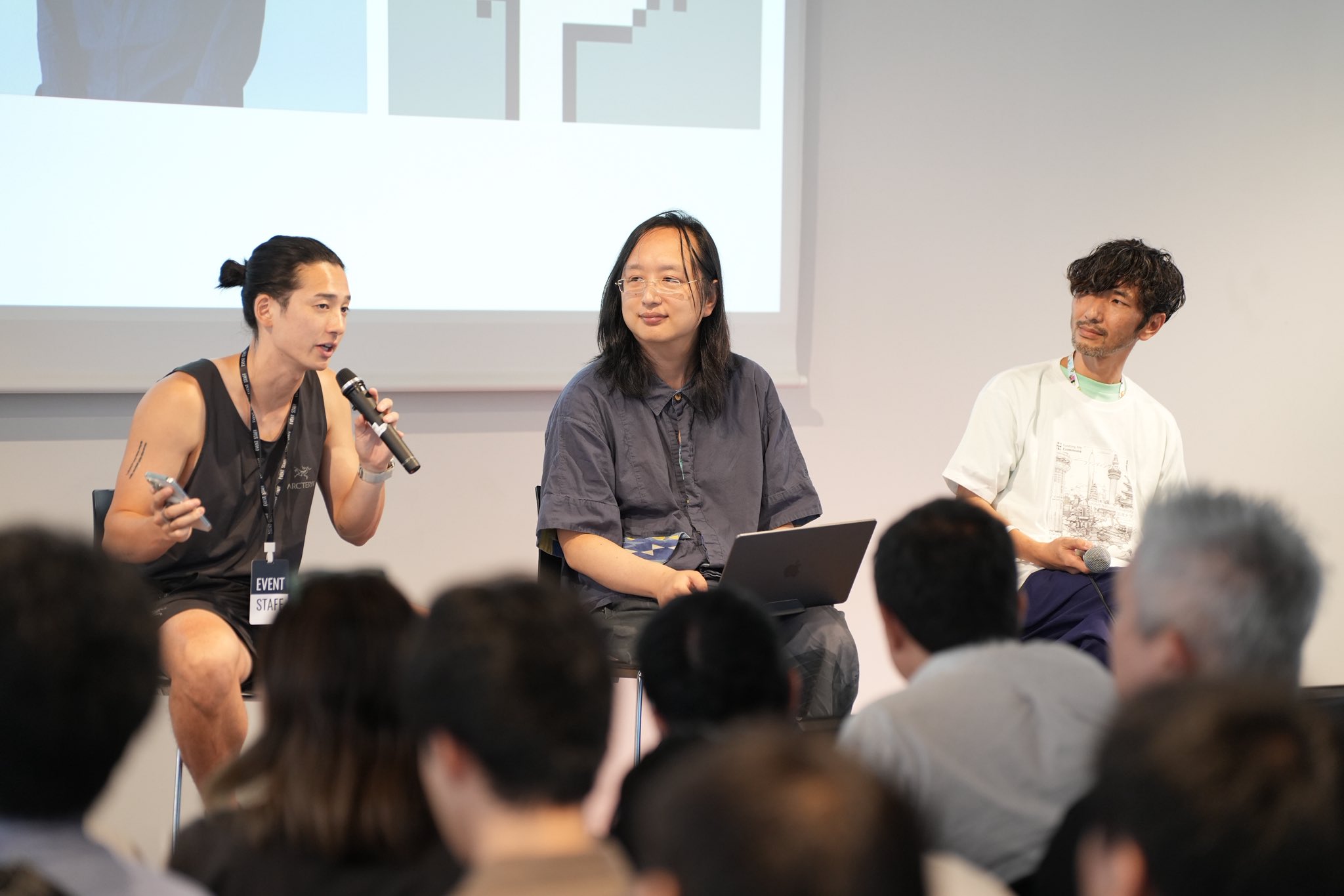
Where a Small Village Decides Its Future
A New Era of Technology, Democracy, and Consensus
A showcase of participatory consensus-building using AI in Otoineppu Village, Hokkaido.
View detailsStructured pre-deliberation prompts (e.g. Plural Reality's Cartographer, Revel and Pénigaud's AI Reflector) that ask participants to articulate their own values and surface tensions in their own reasoning.
And from Japan, Baisoku Kaigi, in particular, really struck a chord. Rather than AI getting in between voters and each other or the democratic process, it positions AI as a tool to help us learn about ourselves and formulate what we're thinking and what we want into actionable policy demands.
…how much it showed product–community fit: it empowers groups of people to make decisions together, evaluate trade-offs, and feel empowered to participate in solution creation. I also saw strategic design choices — the plus/minus style […] People are used to that, and your design makes it so easy and familiar.
Impact Stories
Supporting all forms of decision-making with next-gen consensus tools for the AI era
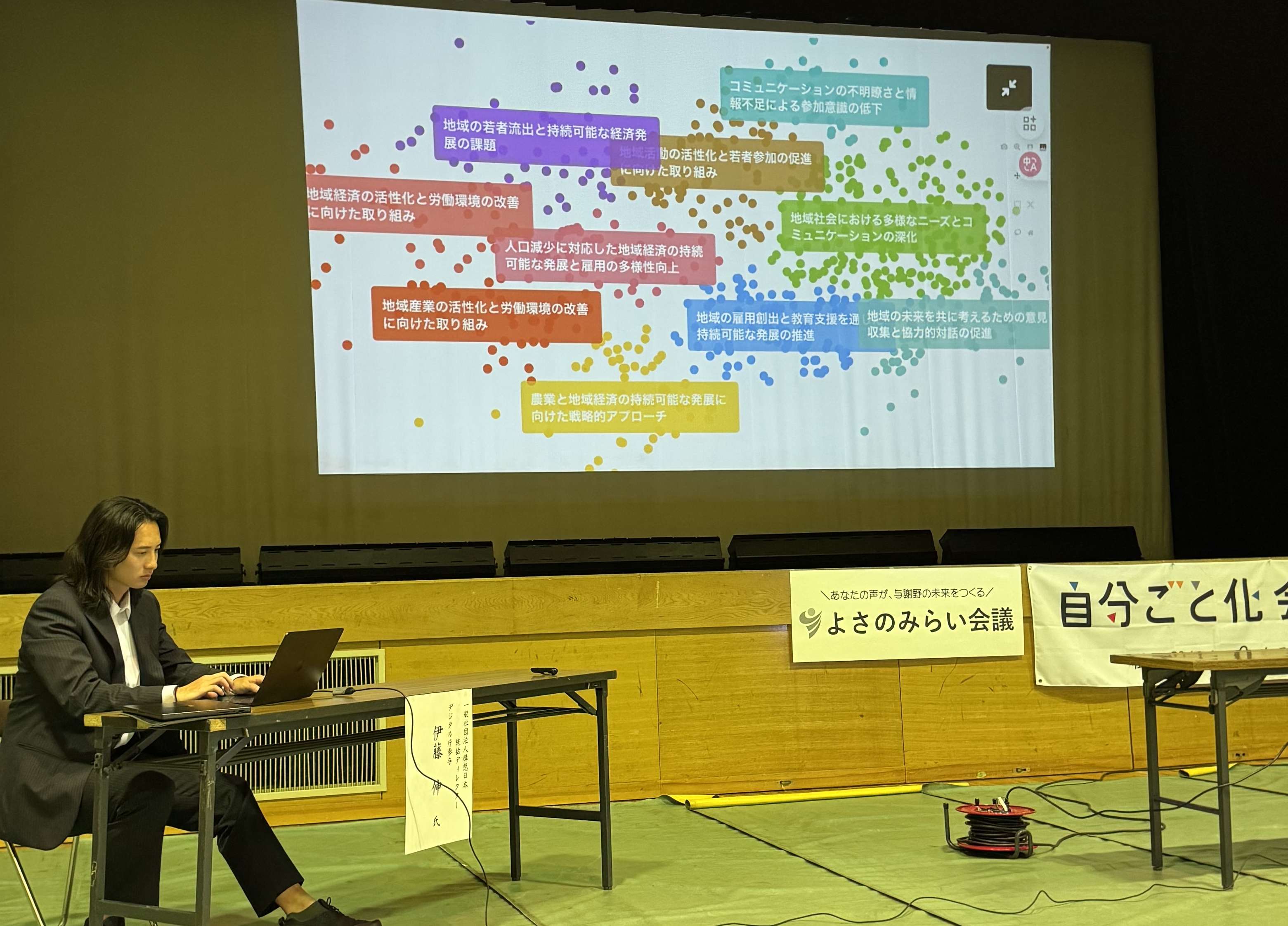
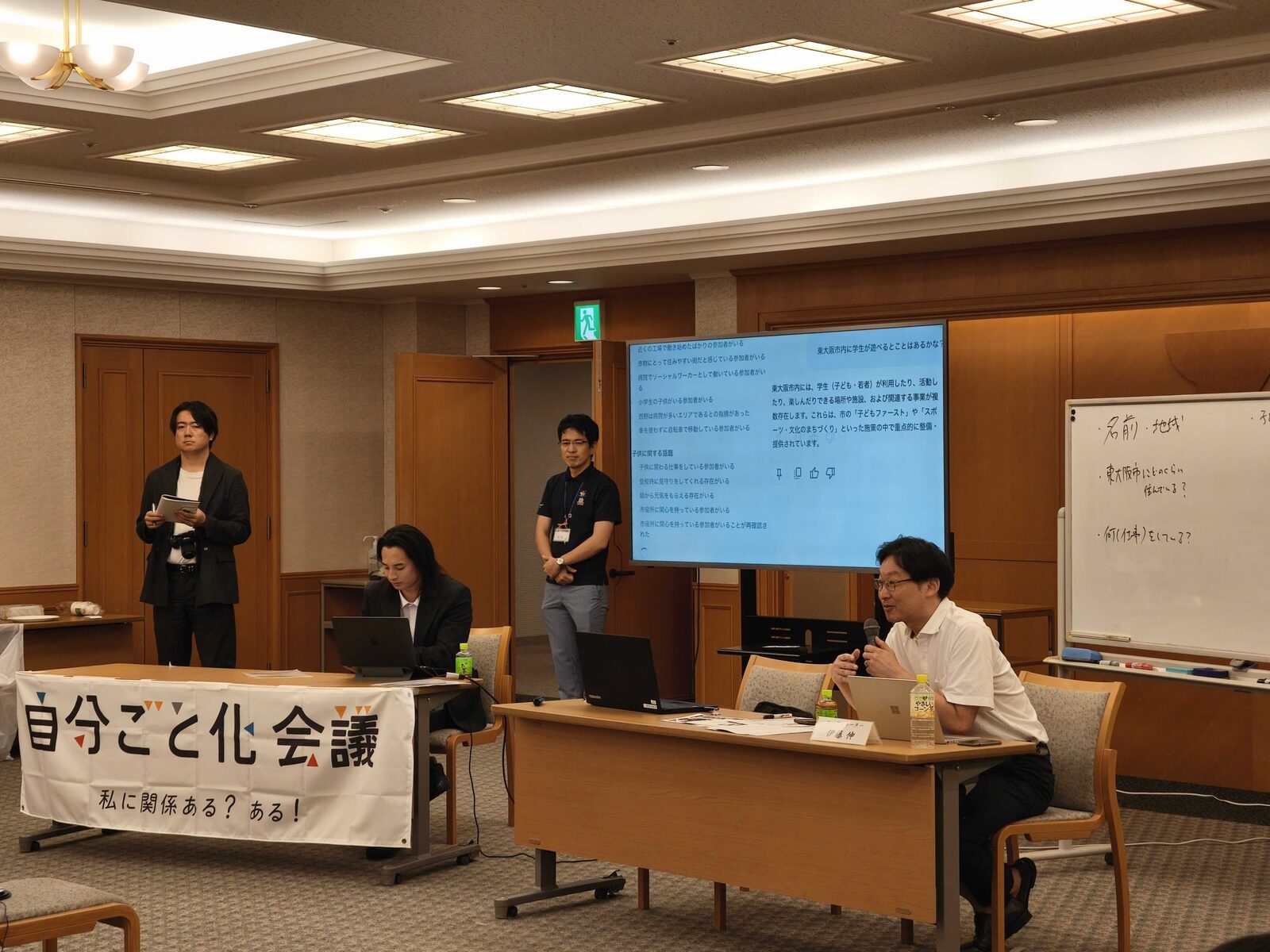
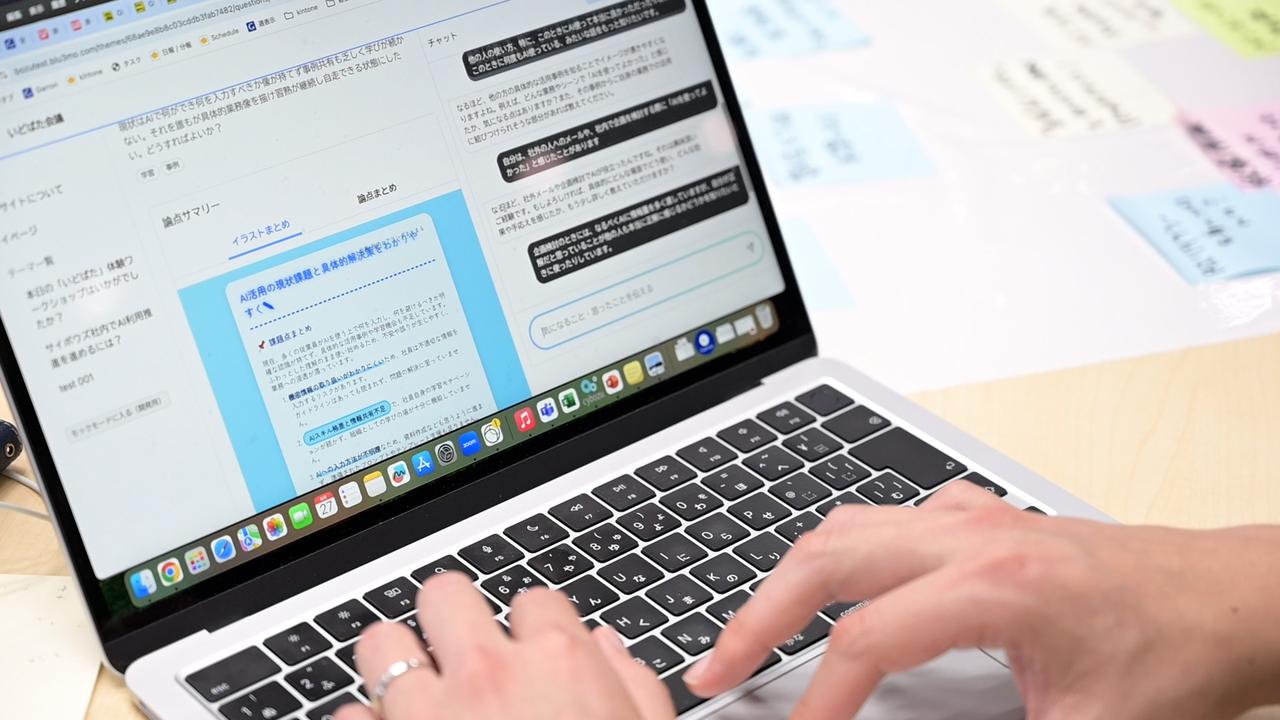
Our software connects municipal listening to consensus building to policy execution, AI-driven in real-time. Turning voices on the ground into the power of decision-making.
Platforms
From gathering information to analysis and action — all in one flow. Integrating diverse perspectives and scattered data to move beyond either/or.
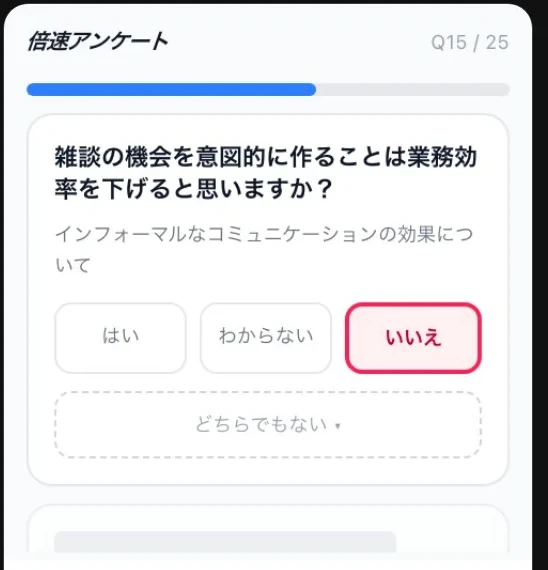
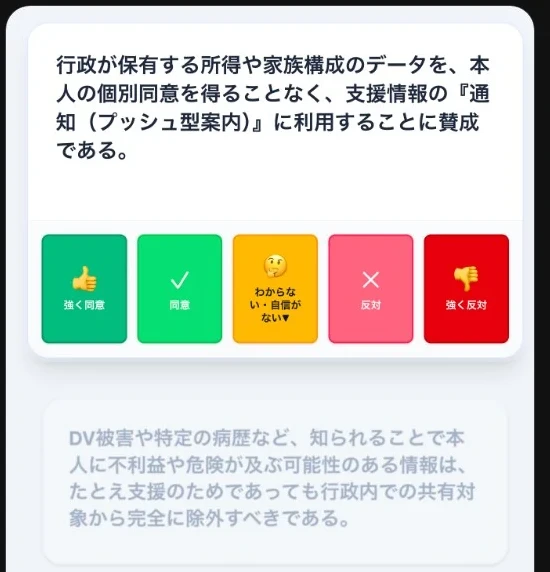
Partners & Voices
With Cartographer, the hassle and enormous time spent on 'whiteboard notes' and 'flip charts with sticky notes' became unnecessary. AI now composes, shares, organizes, and extracts key points on the spot. Humans can focus more on 'essence,' 'fundamentals,' and 'thinking.'
The power of Japan's first AI-organized consensus building through Cartographer was outstanding. I gained the ability to facilitate meetings democratically yet logically while embracing every participant's thoughts. It's entirely thanks to external help, though. (laughs) Prince Shotoku, who was said to listen to many people simultaneously, may have been using AI.
I truly felt the speed of discussion deepening was 'doubled.' With plain AI transcription, you only organize 'what was said' after the fact. But because this runs in real-time, AI can be used to organize and deepen discussions. It's not just a substitute for a note-taker — it also replaces the facilitator.
Cartographer will save people who became leaders without management skills. While discussing editorial policy with Cartographer, I was told that my definitions of 'hit' and 'quality' were vague and confusing my team members, and it even taught me workshop methods.
It was incredibly good. There were some unfamiliar aspects, but Cartographer allowed us to clearly understand each other's positions and have a discussion toward harmony. The actual argument ended, so I'm beyond grateful!!!
Cartographer was a groundbreaking system that made the discussion easier to move forward. Even though I find it difficult to speak in front of others, I was able to participate with confidence.
These are interesting points. Reading this report, it feels like there is so much more we could discuss if we wanted to go deeper.
I thought Cartographer would be very useful for running schools and classrooms. The larger our overseas training programs become, the more we will want a tool like this.