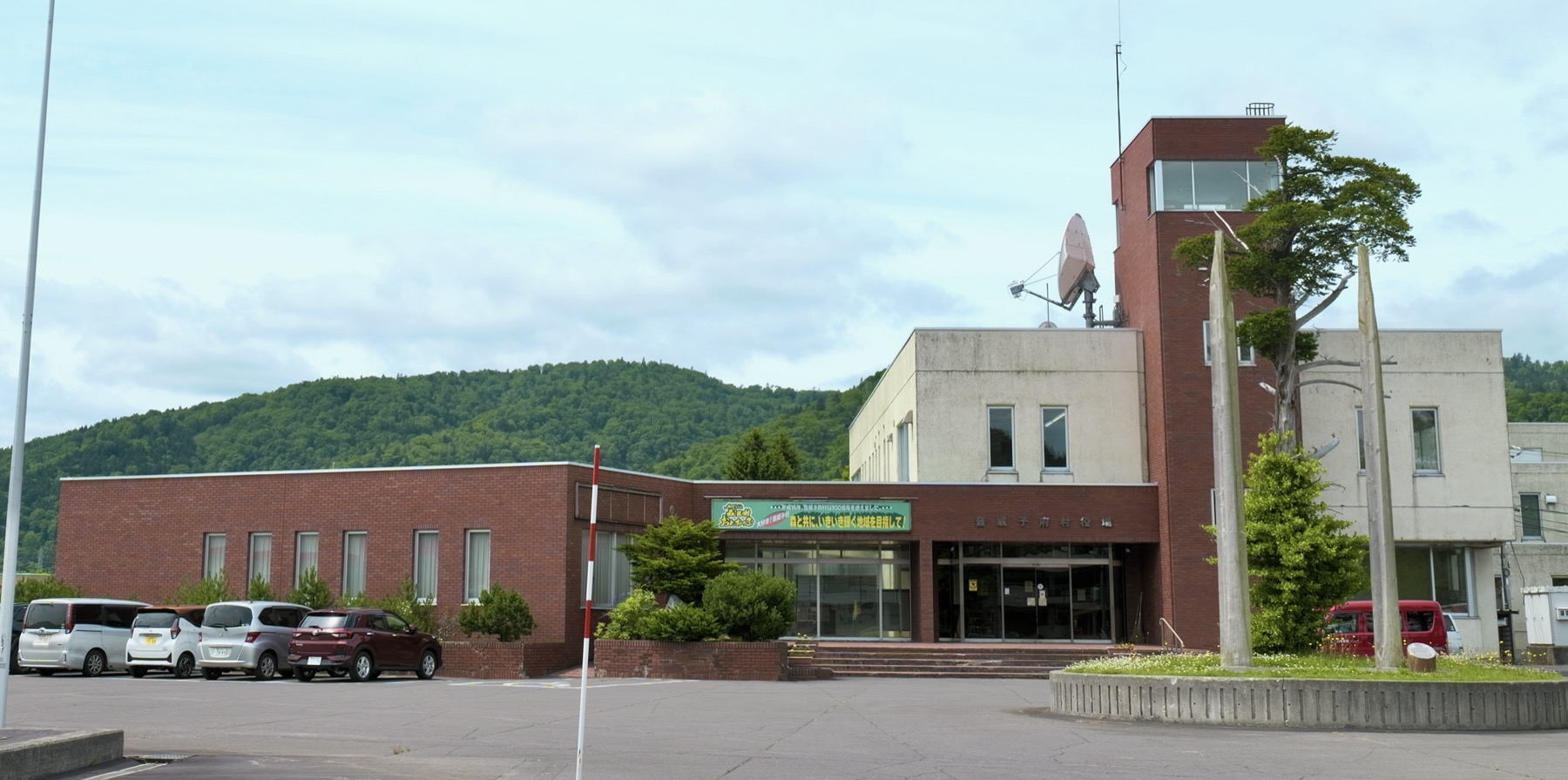
We are starting to connect residents’ voices to decisions by the village office and council in Otoineppu
From April 2026 we begin working in Otoineppu Village, Hokkaido, under the Ministry of Internal Affairs and Communications’ Regional Revitalisation Entrepreneur programme. Working with the village office’s Regional Development Office, we will connect residents’ voices to the village’s decisions.
Otoineppu Village Office
About Otoineppu
Otoineppu lies at the northern tip of the Kamikawa region of Hokkaido, between Asahikawa and Wakkanai, with the Teshio River running through the middle of the village. Its population is 575 (as of the end of August 2026). The village council has six seats, and the last four council elections were all uncontested.
What we will do
Our aim is to make residents’ voices material for decisions by the village office and council. On issues that cost more the longer they are put off, such as local transport, public infrastructure and reorganising public facilities, we create places for residents to talk them through. Our methods are designing and running resident meetings, listening to residents, and organising the council’s and office’s public records and data.
For these discussions we use our consensus-building tool, Baisoku Kaigi. Before talking, residents answer the AI’s questions and put their own thinking into words. We collect agreement and disagreement with opinion statements and show, like a map, where people agree and where views split.
Supporting the council’s decisions with residents’ deliberation
We do not stop at collecting opinions. We bring them to the village office and council, return their response to residents, and follow how the input was used in actual decisions. Keeping the council in place, we aim to open it up through resident participation and digital tools, so that residents’ deliberation supports the council’s decisions.
We plan to hold the first resident meeting in May 2026.
We will record what we try in this small village, including what did not work, and share it as a guide that other small municipalities can use.
This article is a record of Plural Reality’s activities. It is not an official publication of the village or its council.