
With AI, voices go straight into decisions.
Structuring facilitation through AI-mediated communication.
Gather residents' voices and local data, design and run the dialogue, structure the issues, and package them as material for a decision. Plural Reality takes on that whole sequence with research, facilitation and software together.
- 01 Before the meeting
- 02 During the meeting
- 03 After the meeting
If a notice reached you, would you want to know why it was sent to you, as well as what the support is?
Please tell us a little more about why you answered "Yes, depending on the conditions" to Q2.
Choose another position
Or answer in your own words
Tell us a little more
When would it depend on the conditions? Please share one example from your recent experience.
- 01 Before the meetingResearch and analysis
Understand the premises and lay the groundwork for the issues
Follow-up on your answerIf a notice reached you, would you want to know why it was sent to you, as well as what the support is?
Please tell us a little more about why you answered "Yes, depending on the conditions" to Q2.
Choose another position
Or answer in your own words
0/1000 charactersTell us a little more
Follow-up on your answerWhen would it depend on the conditions? Please share one example from your recent experience.
153/5000 charactersSavedBaisoku Survey · AI Follow-up Questions Plural Reality receives the background material from municipal staff, such as the comprehensive plan, population outlook and past surveys, and reads into the context of the discussion. We then run Baisoku Survey with residents: the AI asks each respondent “why” and collects the reasons behind their views. We sort out where people agree and where they split, with quotes from the answers, and hand this to staff as the groundwork for designing the dialogue.
- Groundwork for the issuesFor each point where views split, the reasons on each side with quotes from the original answers.
- Trends by groupHow answers and their reasons differ by age group or area.
- Pre-meeting survey summaryThe figures, plus free-text answers and replies to follow-up questions.
- 02 During the meetingDesign and facilitation
Design the dialogue and make agreement and opposition visible
When the government uses its data to propose support, residents should be able to see at any time why they were selected.
95% agree(of 41 who took a side)
Agree 39/Disagree 2/Not sure 3
Confidence 93% (share who took a side)
Everyone disagreesDividedEveryone agreesYamada
Start with families with children.
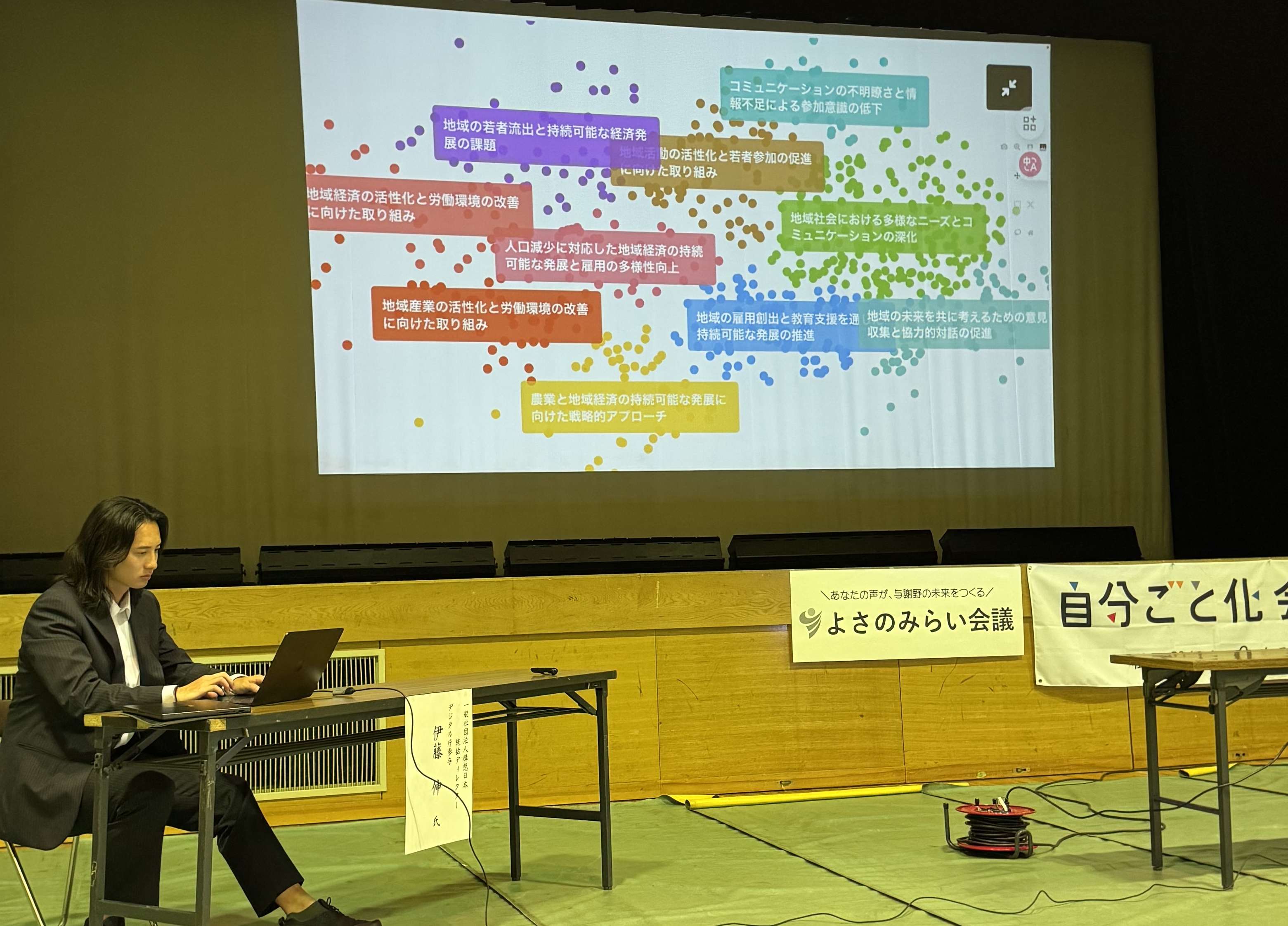
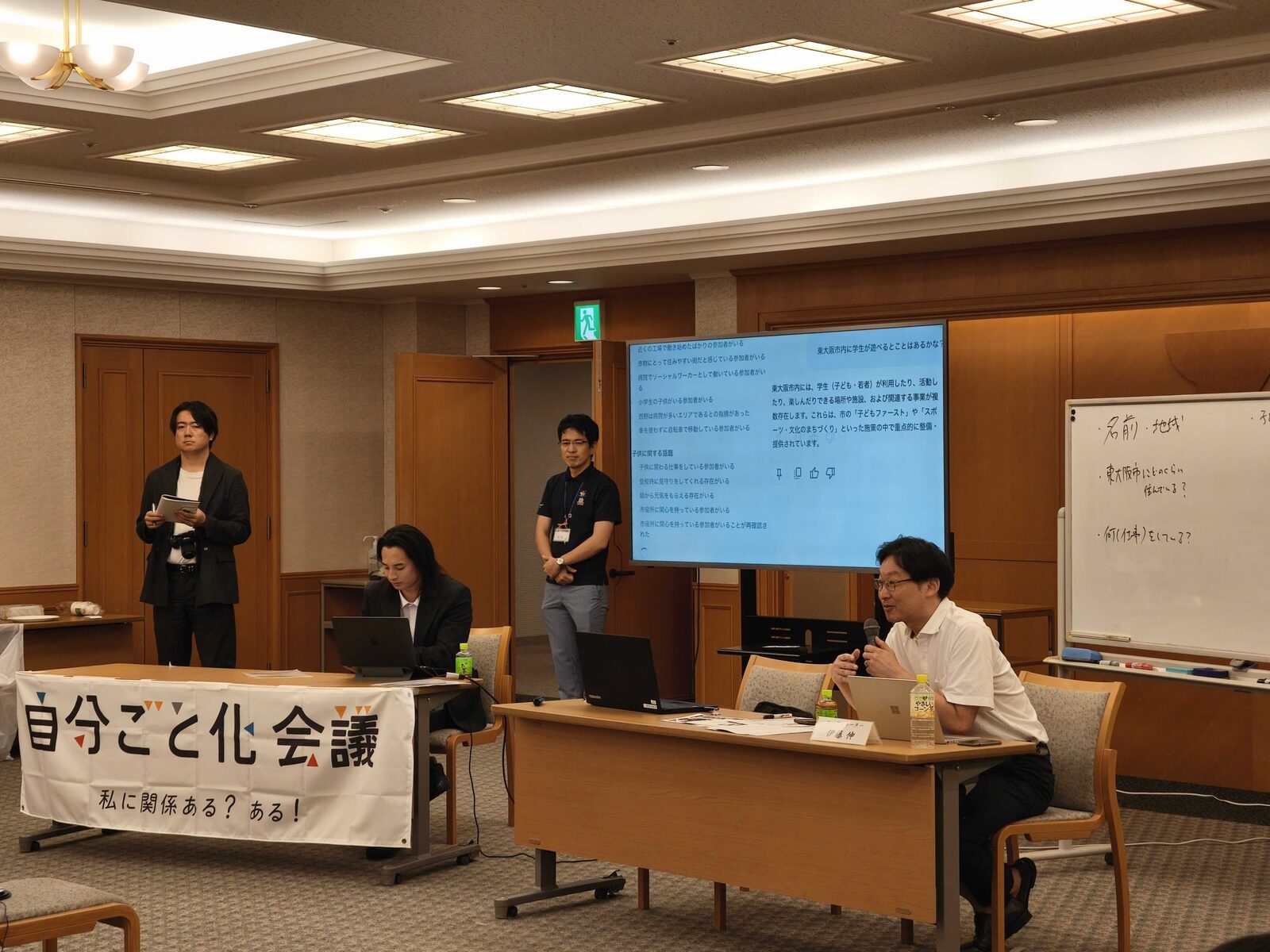
18 people3 groupsAxes: horizontal = main divide 41% / vertical 22%Cartographer · Agreement Map, Participant Map Taking the groundwork from the pre-meeting survey, Plural Reality and municipal staff work out the breakout groups, the order of questions and the facilitation script together. On the day we support the facilitation, and Cartographer draws agreement and opposition from participants' votes as they come in and shows the map of views on screen. The map, the record of what was said and the proposal sheets are carried over as material for the synthesis afterwards.
- Facilitation scriptThe order of questions for each group, timings, and how to respond to likely views.
- Agreement MapOne dot per view: points everyone supports sit apart from points that divide the room.
- Record of what was saidA transcript of the discussion.
- 03 After the meetingSynthesis
Structure the issues and package them for the decision
The big picture in numbers
- Respondents
- 120
- Submitted
- 120
- Not submitted
- 0
2. How do you feel about the government sending you notices of support you could use?120 answers I'd like them46Yes, depending on the conditions52I'd rather not22Depending on the conditions is the largest group. The conditions centre on explaining why someone was chosen and using the data for the notice only.
Where people agree
AgreedLet people check why a notice came to them
Whether they want notices or are wary of them, people ask to be able to check afterwards why a notice was sent to them. Many say it is also what would let them tell it apart from a scam.U8-Q4U31-Q4
Where opinions split
SplitUsing data without consent
Fine for notices
Better to be told than to miss support. It's fine if the data is used for notices only.U15-Q5U42-Q5
Ask for consent first
It's unsettling to have my income and family looked at without my knowing.U63-Q5U97-Q5
Baisoku Survey · Final Report Plural Reality takes the transcripts and proposal sheets from the meeting, merges them and organizes the issues for each breakout group. Residents' words are kept as they said them, not paraphrased, and compiled into draft proposals and reports. Participants check and correct the content themselves, and municipal staff then receive it in a form government and council can use for the decision as is.
- Draft proposalsEach proposal with the residents' remarks that support it, kept word for word.
- Summary reportOverall agreements and disagreements, and how the discussion moved.
- Report back to residentsHow the views raised were handled, for participants and residents.
Past deliverables
We structure the voices and dialogue gathered from before the meeting through to after it, and hand them over as a report that can go straight into decision-making and the departments’ own review.
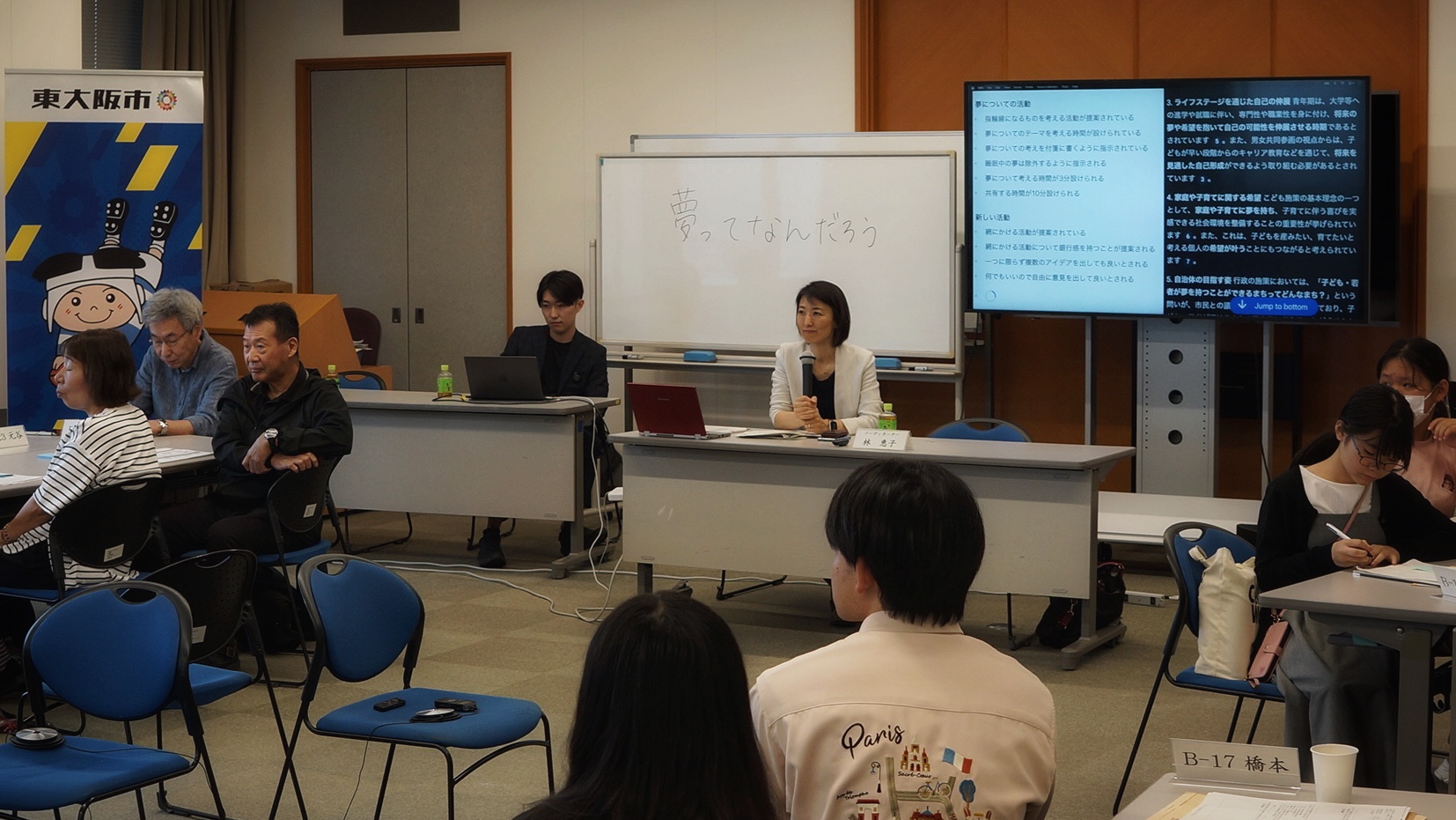
The Design Philosophy Behind Facilitation in the AI Era.
At the intersection of technology and deliberation, we've organized the challenges and opportunity areas visible from field practice. A compilation of approaches and insights for advancing consensus building.
Read articleCapabilities, and where they work.
The software layer that supports consensus-building is made of Baisoku Survey and Cartographer. Here is what each product does, with live usage figures.
- AI Follow-up QuestionsBaisoku Survey
- Response SummariesBaisoku Survey
- Opinion ClustersBaisoku Survey
- Trends by GroupBaisoku Survey
- Final ReportBaisoku Survey
- Embeds & AI IntegrationsBaisoku Survey
- Pre-meeting PulseCartographer
- Issue StructuringCartographer
- Agreement MapCartographer
- Participant ProgressCartographer
- Discussion ReportCartographer
- Baisoku Survey
- Surveys where AI asks each respondent why they answered
- Cartographer
- A live map of where a group agrees and disagrees
Products
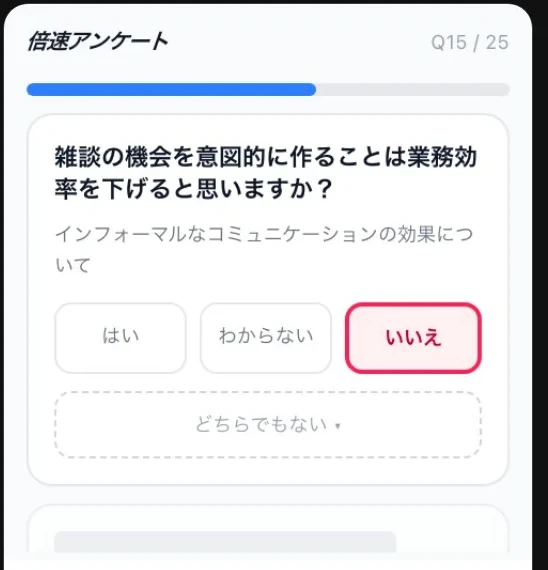
Baisoku Survey
Where Google Forms end with a yes or a no, AI asks each respondent why. It draws out the views that traditional surveys miss.
- Input: Citizen survey responses
- Capabilities: The reasons behind answers, trends by group, and clusters of opinion made visible
AI asks each respondent why, revealing authentic opinions and structures invisible through surface-level tallying.
Open the Baisoku Survey site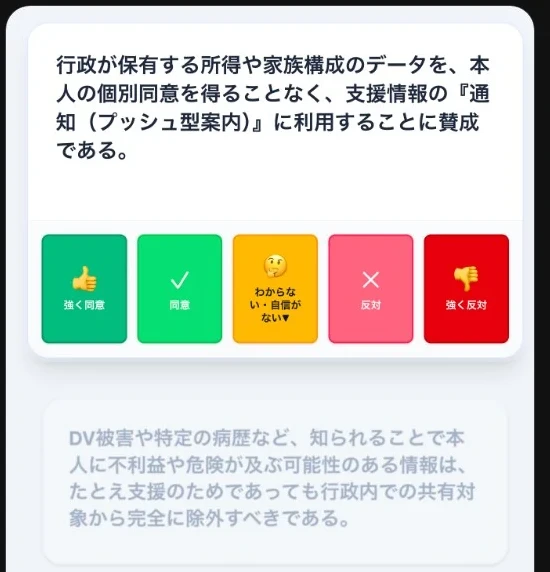
Cartographer
Structures the issues from participants' votes as they come in, without sticky notes or flip charts. Supporting neutral dialogue without being dominated by the loudest voices.
- Input: Meeting discussions
- Capabilities: A live Agreement Map, automated minutes, structured discussion points
In meetings, areas of agreement and areas needing further discussion are clearly separated, creating a state where it's visible what to discuss next.
Open the Cartographer siteImpact Stories
Supporting all forms of decision-making with next-gen consensus tools for the AI era

Contact Form
Pricing by individual quotation
We prepare a quotation based on the scope of work, scale of use and support required. Tell us about the challenge you are working on.