
Opening Up Participatory Policy Deliberation with Cartographer: A Field Report
Executive Summary
Digital Democracy 2030 (DD2030) is a project that seeks to harness technology to bring citizens’ voices into the process of improving politics. It envisions a future in which transparency and trust are paramount and many more people can participate in policymaking. (See: Digital Democracy 2030 Official Website)
This report presents the results of an online deliberative workshop conducted as an implementation of the DD2030 Project Core Loop. The workshop, held on January 10, 2026, used Cartographer (Baisoku Kaigi), an AI-native decision-support tool, to explore the topic of a “push-based social security system.”
Within the workshop’s limited three-hour timeframe, AI assistance dramatically accelerated the processes of “structuring issues,” “synthesizing opinions,” and “building consensus”—work that traditionally required professional facilitators several days or even weeks to complete.
Cartographer analyzed participants’ diverse views in real time and clearly visualized areas of agreement and disagreement. The following Citizen Opinion Report is one example of the output generated through this deliberative process.
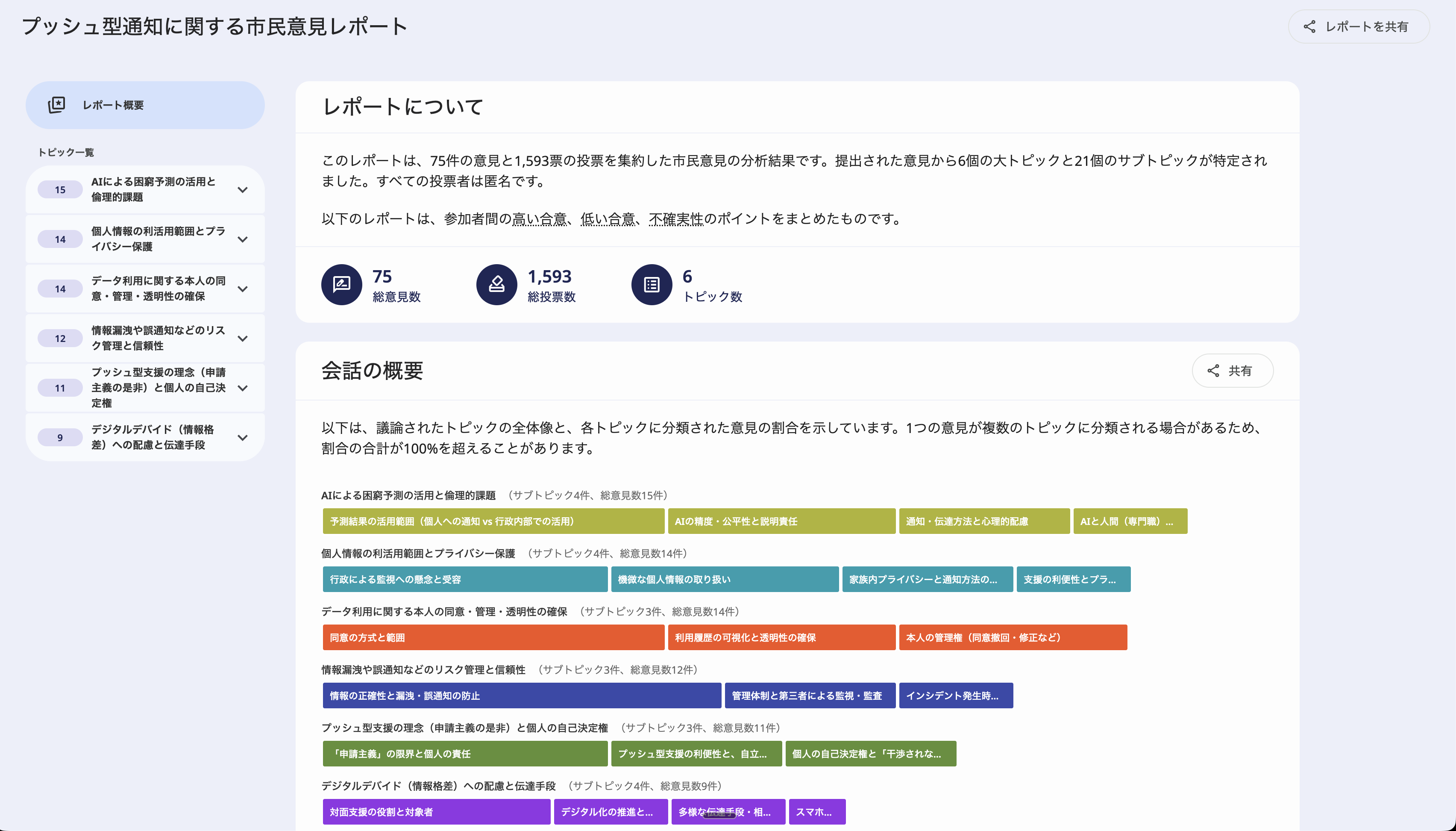
Citizen Opinion Report on Push Notifications: A report analyzing citizens’ opinions, generated by Cartographer. Based on patterns in participants’ responses, AI automatically identifies the key issues and visualizes areas of agreement and disagreement.
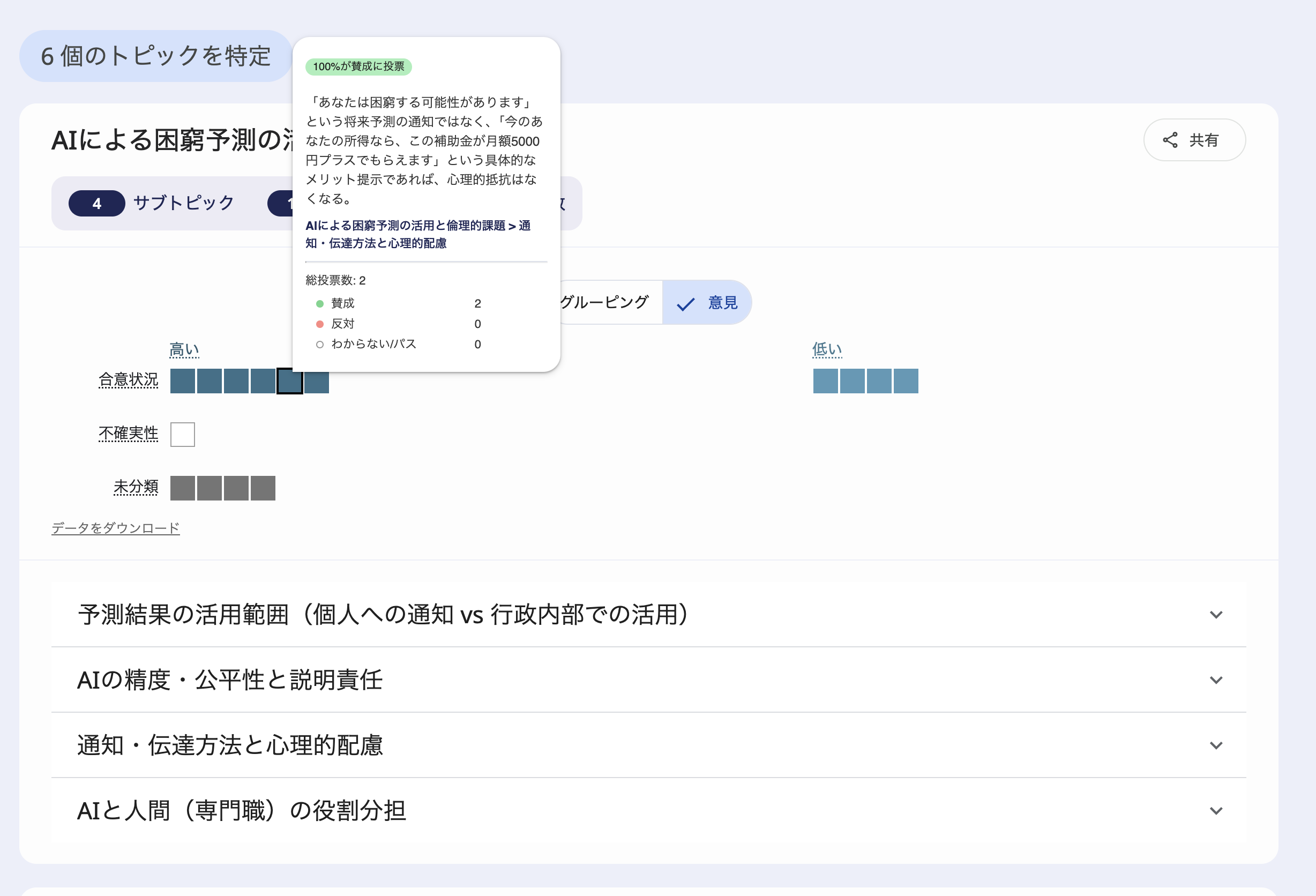
Detailed issue analysis: The distribution of citizens’ opinions is visualized for themes such as “privacy protection,” “the digital divide,” and “trust in government,” clearly identifying the points that should be discussed next.
Key Outcomes
- A qualitative transformation in the discussion: The discussion evolved from “simple support or opposition (a binary conflict)” into “a search for conditional consensus” centered on what conditions (guardrails) would enable trustworthy implementation
- The democratization of facilitation: With AI assistance, community members who are not experts can lead high-quality deliberation
- Citizen-led requirements definition: Citizens themselves created concrete specifications for reconciling “a push system that leaves no one behind” with “the freedom to ensure that no one’s life is infringed upon”
- Time savings: A process that traditionally took several weeks was completed in three hours
How the Discussion Changed (Before Deliberation → After Deliberation)
| Before Deliberation | After Deliberation | |
|---|---|---|
| Typical position | “I oppose it because I’m afraid of data leaks” vs. “I support it for the convenience” | “If strong governance and the right to opt out are guaranteed, I could consider it positively” |
| Nature of the discussion | An entrenched conflict | Consensus building around a “third way” that transcends the conflict |
Chapter 1 Introduction: What Is Project Core Loop?
1.1 Background of DD2030 and Digital Democracy
Digital Democracy 2030 (DD2030) is a community project that aims to implement a new form of democracy in which digital technology makes citizens’ diverse voices visible and incorporates them into policymaking.
At its heart is “Project Core Loop,” which seeks to establish a successful cycle in Japan: “citizens’ voices → consensus → decision-making → implementation → greater satisfaction.” Awareness of digital-democracy methods such as broad listening also grew in Japan in 2025, but implementation remained limited compared with Taiwan. Civic participation will decline if people continue to feel that speaking up changes nothing. It was therefore essential to create even one small success as quickly as possible and make it replicable.
Goal and Design Philosophy
The goal of Project Core Loop is to create a successful example of AI-enabled digital democracy in Japan. It aims to go beyond generating insights and reach policy adoption, implementation, and ultimately citizen satisfaction.
The design reconfigures the four processes in Audrey Tang’s “Six Packs of Care” (Attentiveness / Responsibility / Competence / Responsiveness) as a loop, drawing primarily on Taiwan’s vTaiwan model and Stanford University’s Deliberative Polling.
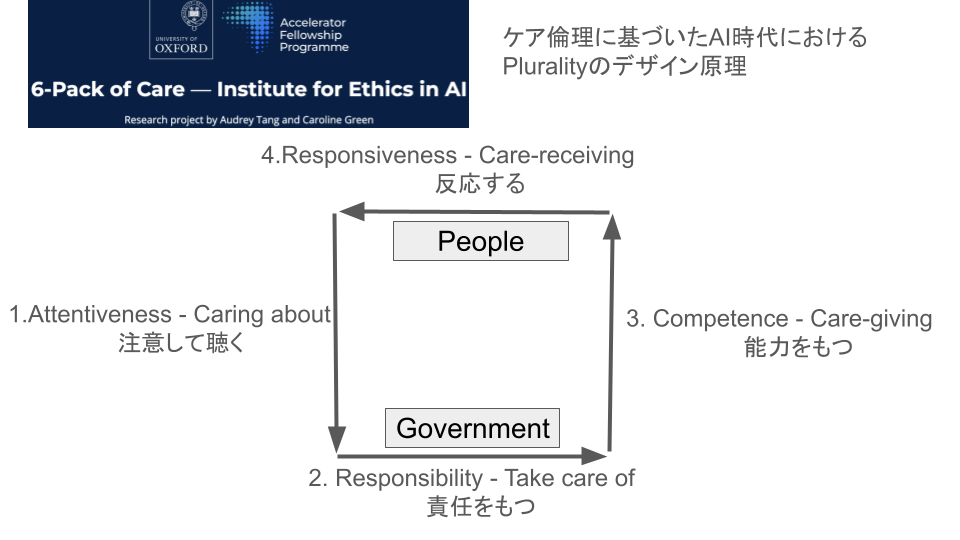
Diagram reconfiguring the four elements of the 6-Pack of Care as a core loop
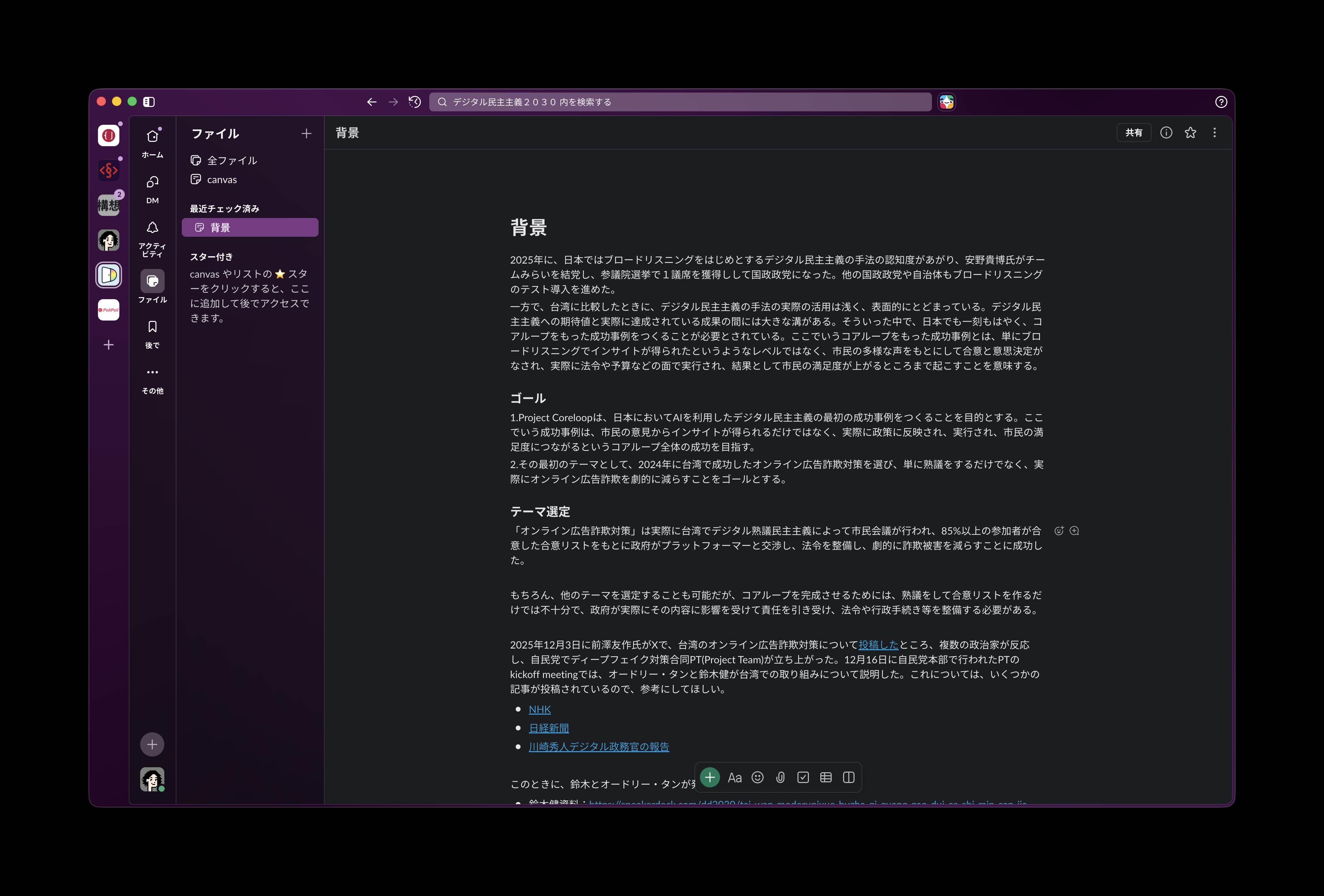
Example of the Project Core Loop planning process (reference: Project Meeting Minutes (Google Docs))
Reference Models
- Taiwan’s vTaiwan: A policy-development process has been established that moves from soliciting citizen input to consolidating opinions, receiving responses from government ministries, and enacting legislation. Online citizen assemblies produce a “list of points with at least 85% consensus,” giving their recommendations influence with the government. vTaiwan uses “Polis” to visualize opinions; Cartographer is positioned to fulfill that role in this initiative.
- Stanford University’s Deliberative Polling (DP): A method that measures changes in attitudes among randomly selected citizens through a rigorous sequence: pre-deliberation survey → study of briefing materials → small-group discussion → questions for experts → post-deliberation survey.
References
- Ken Suzuki’s Materials (Taiwanese Moderation × Countermeasures Against Advertising Fraud)
- Audrey Tang’s Lecture Slides (Collaborative Immune System / From Digital Deliberation to Precise Legislation)
1.2 Purpose of This Experiment
The experiment aimed to determine whether a deliberative cycle (survey → deliberation → change) could be completed within the limited span of three hours, and how AI tools such as Cartographer and NotebookLM could support facilitation.
Although “countermeasures against online advertising fraud” is envisioned as the main theme for Project Core Loop, “push-based social security systems” was selected for this implementation test. Because it brings together multiple intersecting issues—including privacy and convenience, trust in government, and the digital divide—it is well suited to evaluating the quality of deliberative design.
Chapter 2 What Is “Cartographer”?
2.1 An AI-Native Decision-Support Tool
“Cartographer” is an AI-native decision-support tool developed by Plural Reality. Unlike conventional survey or meeting-support tools, it is an application that redesigns the very concept of a “survey” around the premise that an “LLM (large language model) is a computer capable of speaking.”
Crucially, Cartographer is not a tool in which “AI decides the outcome of a discussion.” AI remains strictly confined to the roles below, while humans make the final decisions.
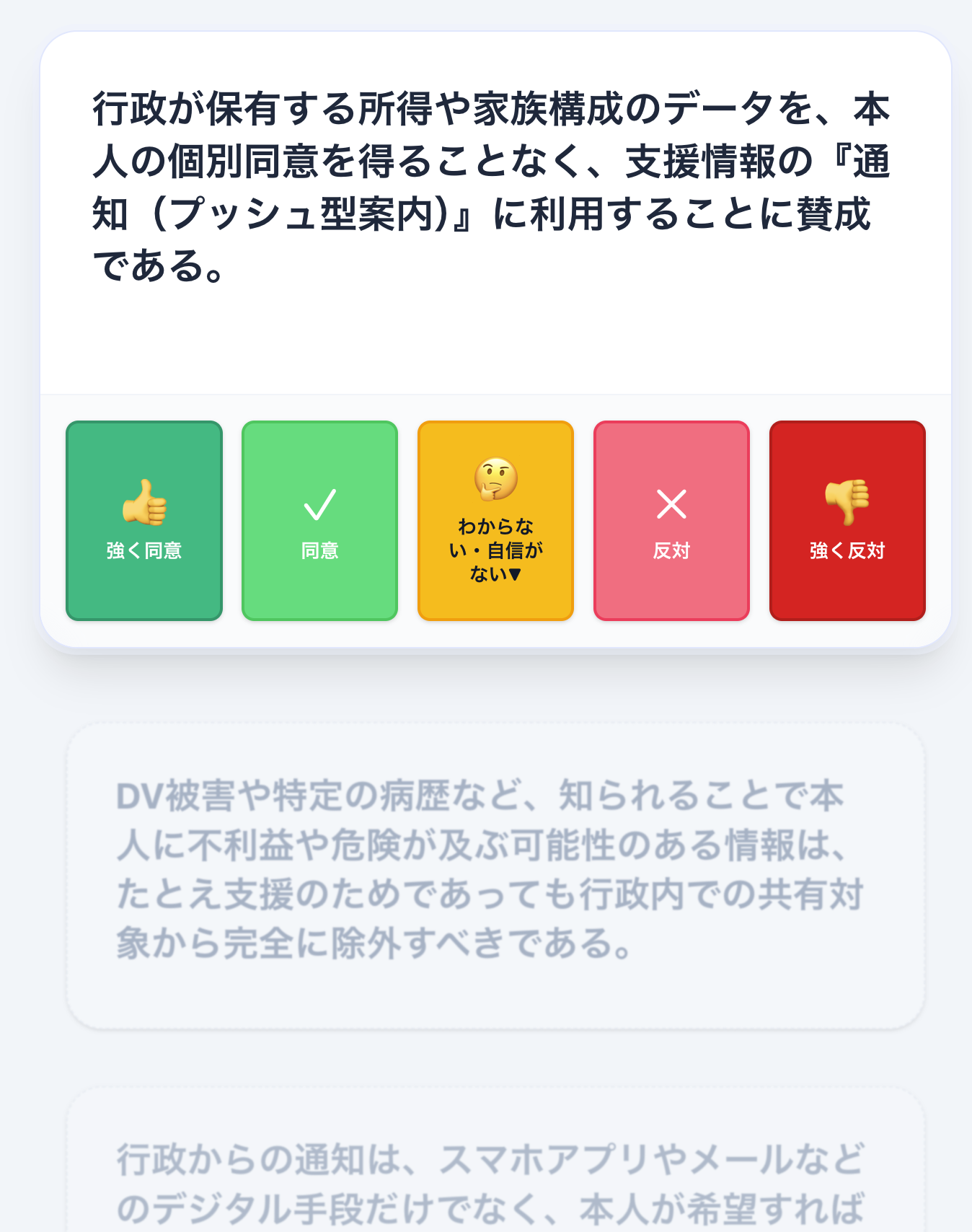
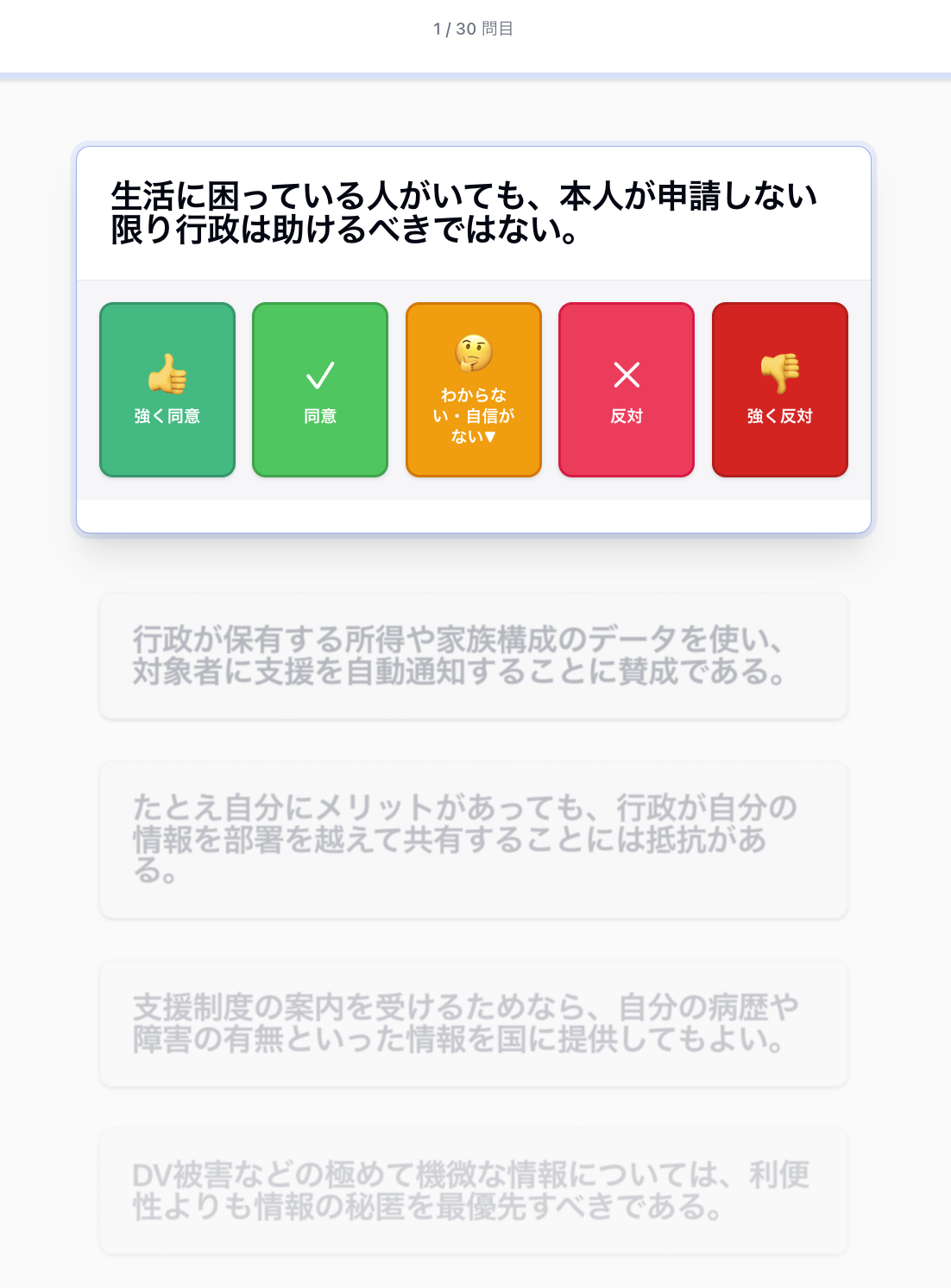
Cartographer question-response screen (from the first session)
2.2 Cartographer’s Three Core Features
Feature 1: Automatic AI Question Generation
When a team enters “what it wants to decide,” AI automatically generates questions related to that topic. Traditionally, “designing appropriate survey questions based on the matter to be decided” required advanced specialist expertise; in Cartographer, AI performs this role.
Furthermore, the inclusion of “meta-questions” (questions that ask about the importance of the issues themselves) allows the process to be corrected along the way, even if the initial definition of “what the team wants to decide” is somewhat off target.
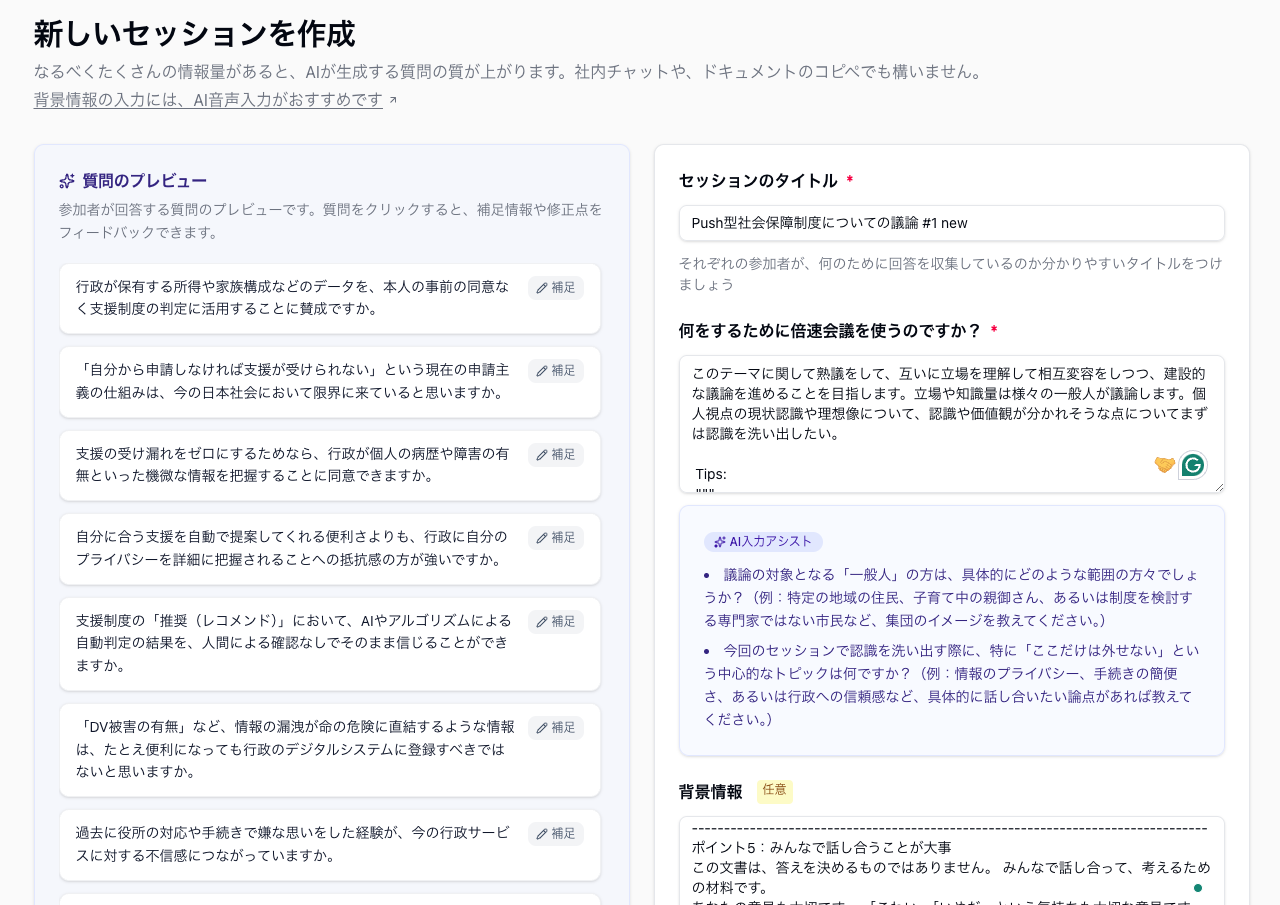
Cartographer setup screen: entering a theme prompts AI to automatically generate relevant questions
Feature 2: Articulating Individual Perspectives Through the “Personal Report”
When participants answer the questions, AI analyzes their response patterns and generates a report that effectively says, “I’ll put your views into words for you.” This makes it possible to visualize “opinions I could not articulate even for myself.”
Respondents have reacted positively, saying, “The AI understands me” and “It was worth answering.”
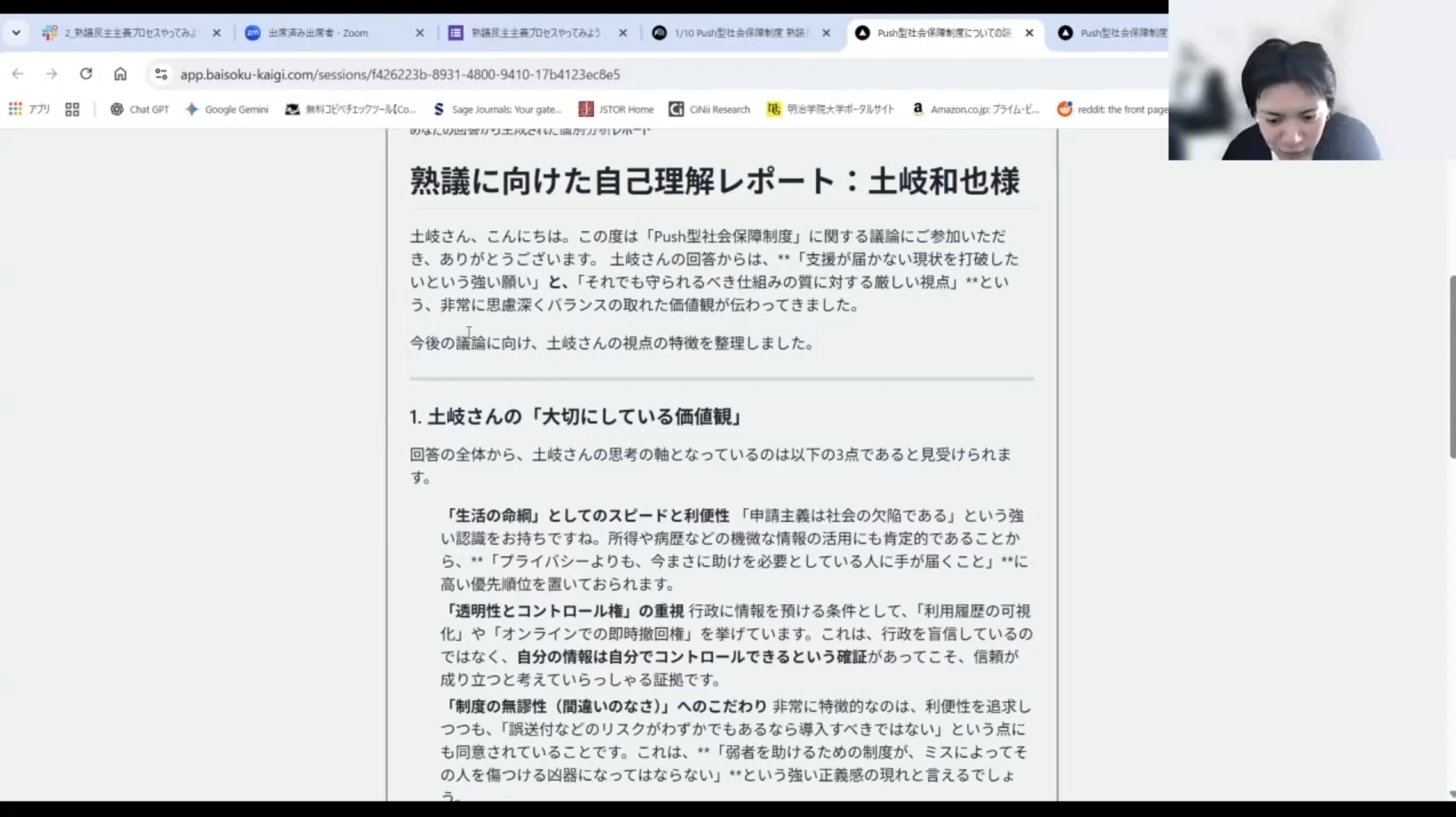
Personal Report: AI analyzes participants’ response patterns and articulates their individual views
Feature 3: Visualizing Perspectives Within a Group
The response results of each team member are integrated to visualize “points of agreement,” “points of conflict,” and “points that no one understands.”
Unlike static pie charts from conventional tools such as Google Forms, the system presents clear positions and issues, as well as “what should be discussed next (next actions),” eliminating the need to analyze survey results manually.
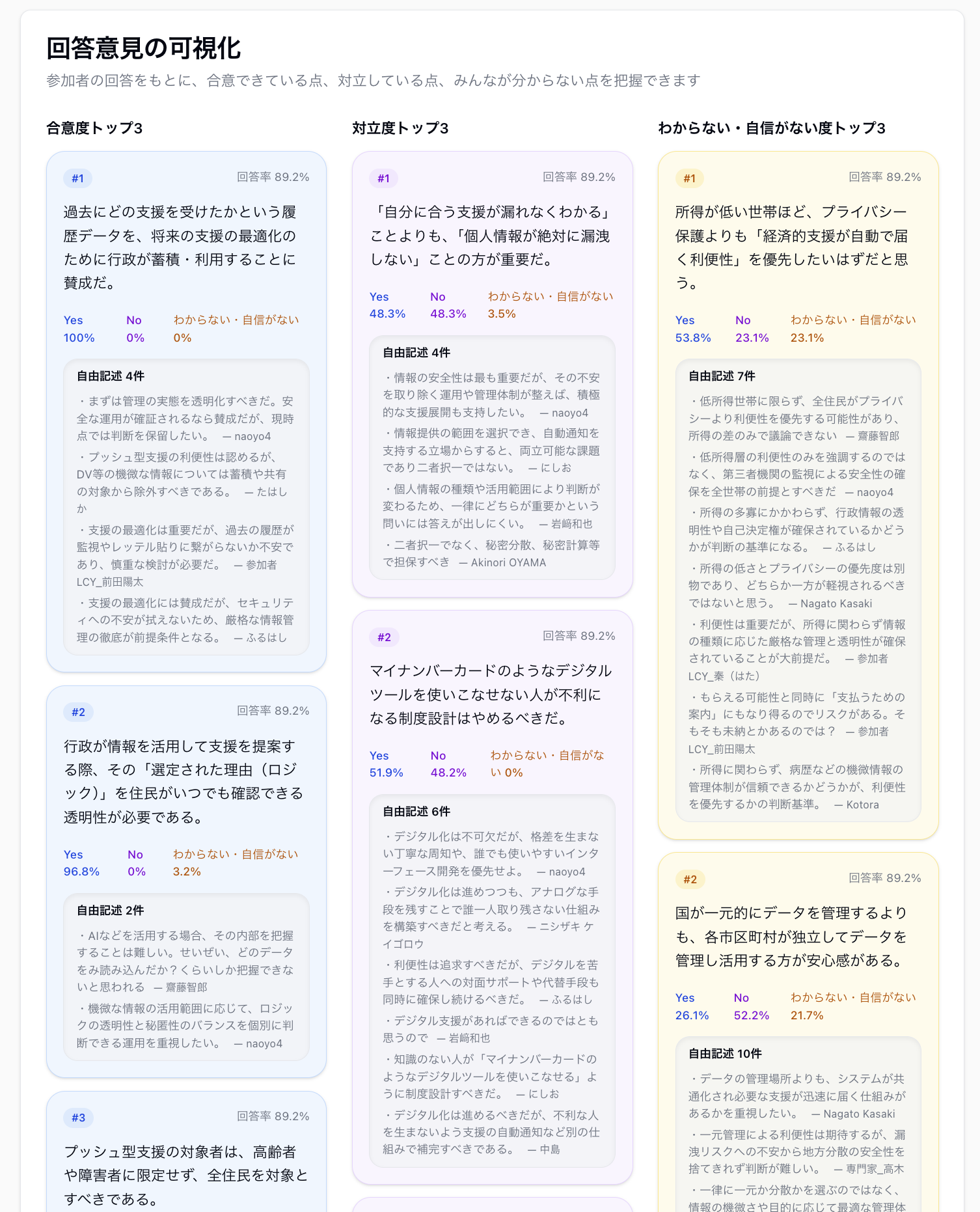
Example visualization of points of agreement and disagreement (from the first session)
2.3 Differences from Conventional Methods
Conventional consensus-building methods led by facilitators required subject-matter experts to design questions, collect and analyze responses, formulate hypotheses, and interview participants, drawing on techniques such as surveys and interviews. However, the number of people who could be interviewed was limited, and effective consensus building was difficult when participants had widely varying positions and levels of prior knowledge.
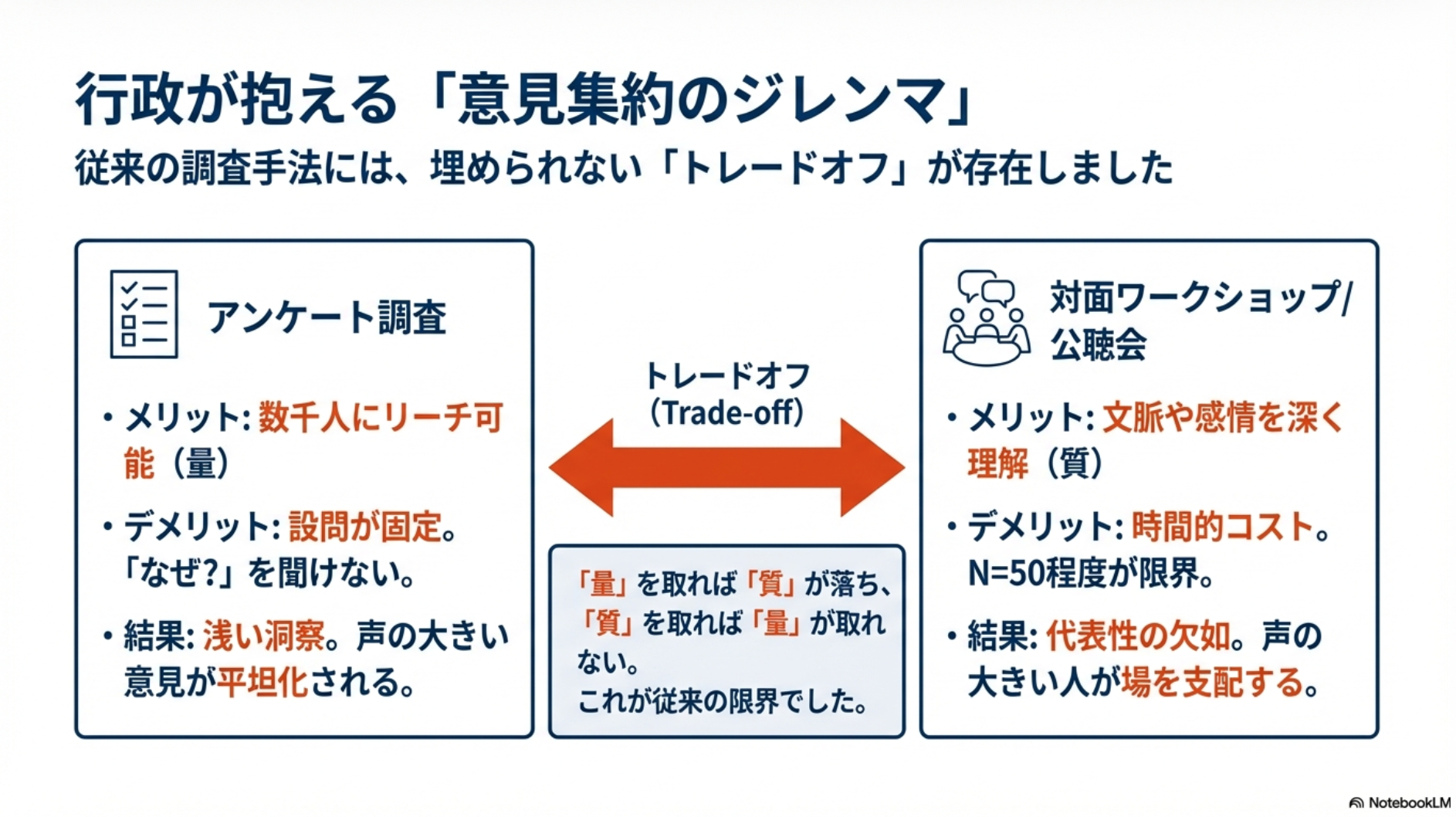
Overview of Cartographer: How It Differs from Conventional Surveys
Another major difference in Cartographer lies in how participants answer questions. Instead of using a conventional 5-point rating scale, participants can respond to each question using their “degree of conviction” as the scale. When they select “I don’t know,” they can enter a response in natural language. The system also recommends several opinions based on their previous response patterns, helping them articulate their views.
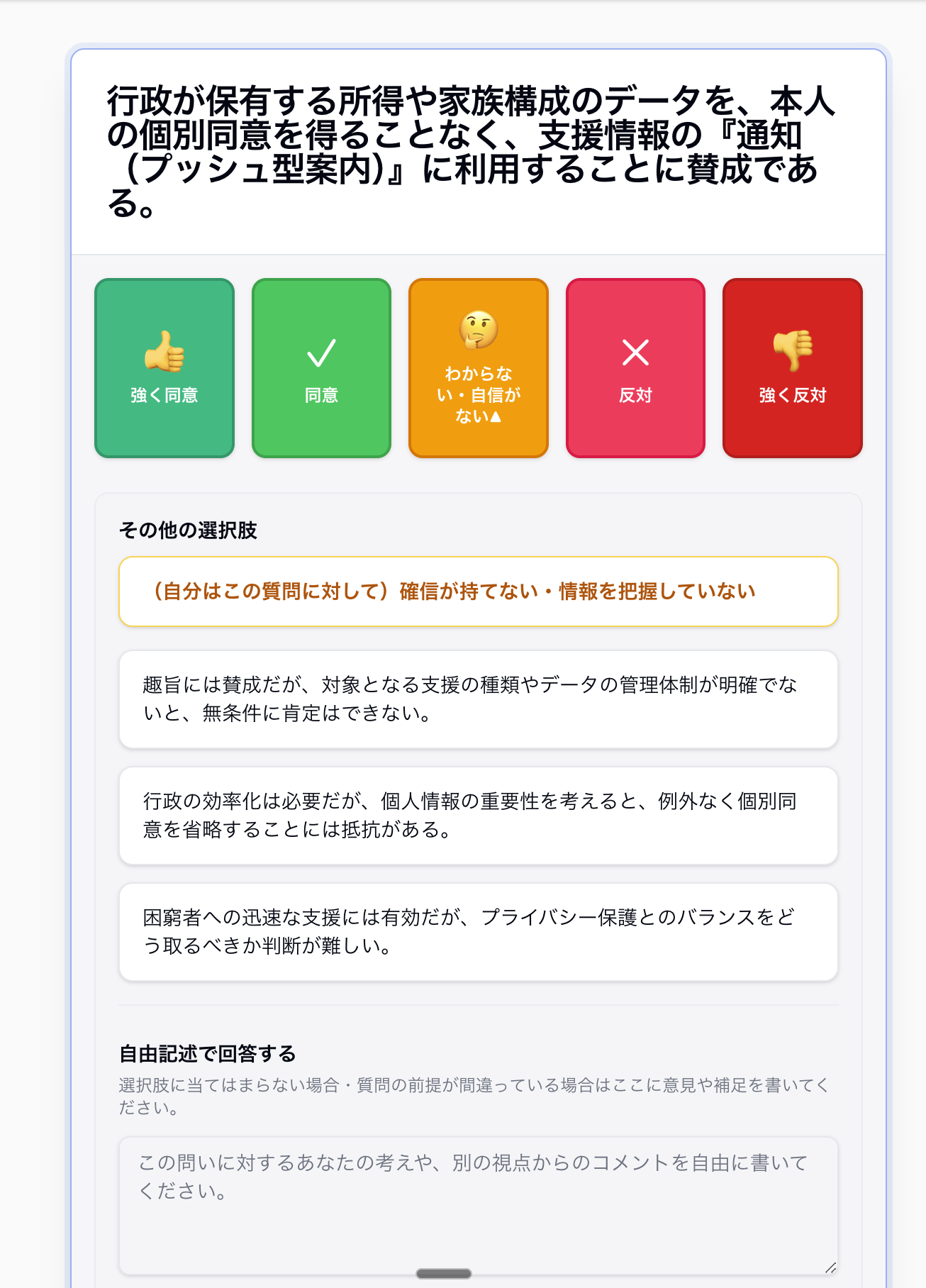
A response format based on degree of conviction, with natural-language support for articulating opinions
As a result, substantially more information can be obtained from people than with conventional surveys, in which the questions and response options are fixed.
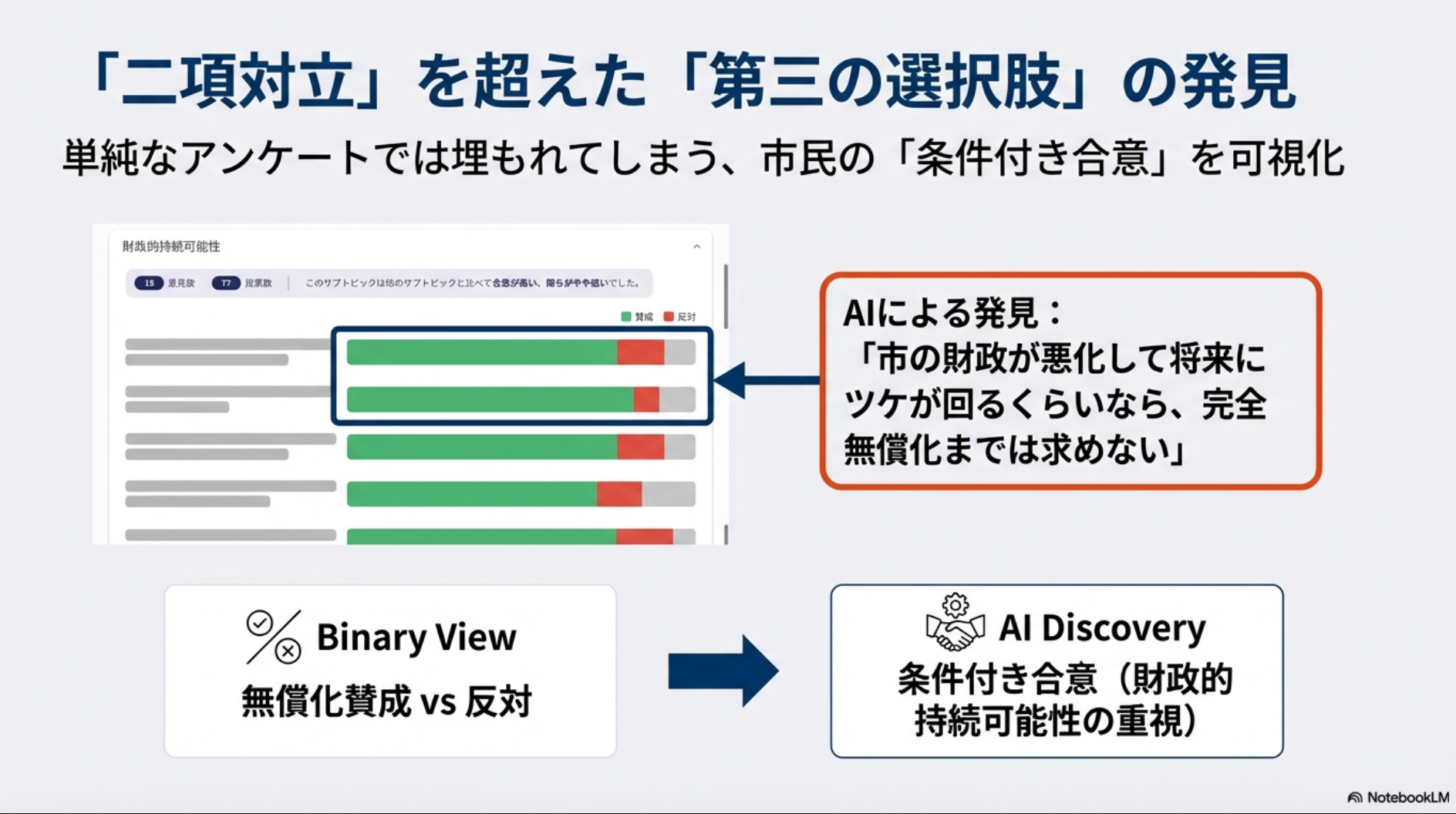
Discovering a Third Option Beyond Binary Opposition
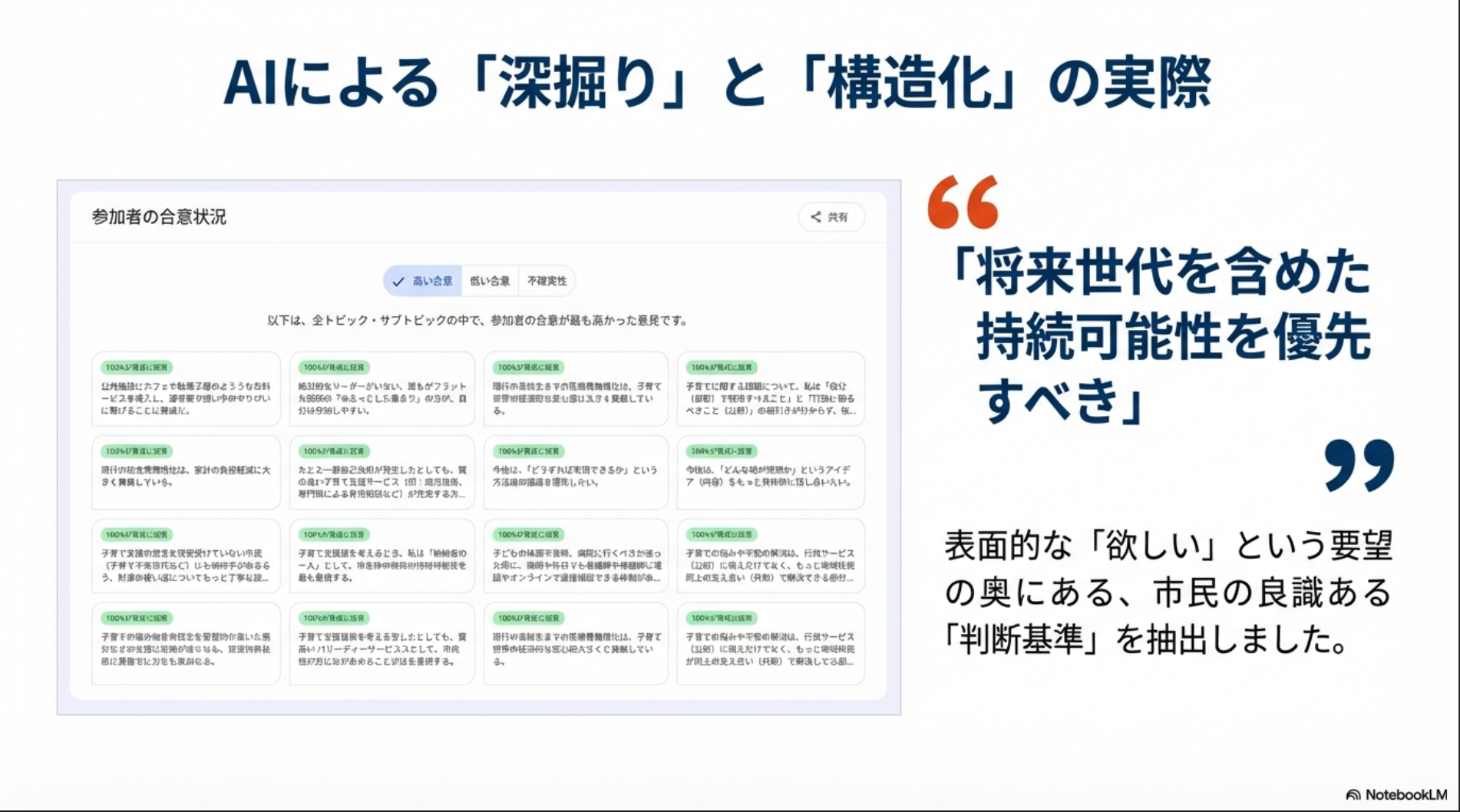
AI-Powered Deep Exploration and Structuring in Practice
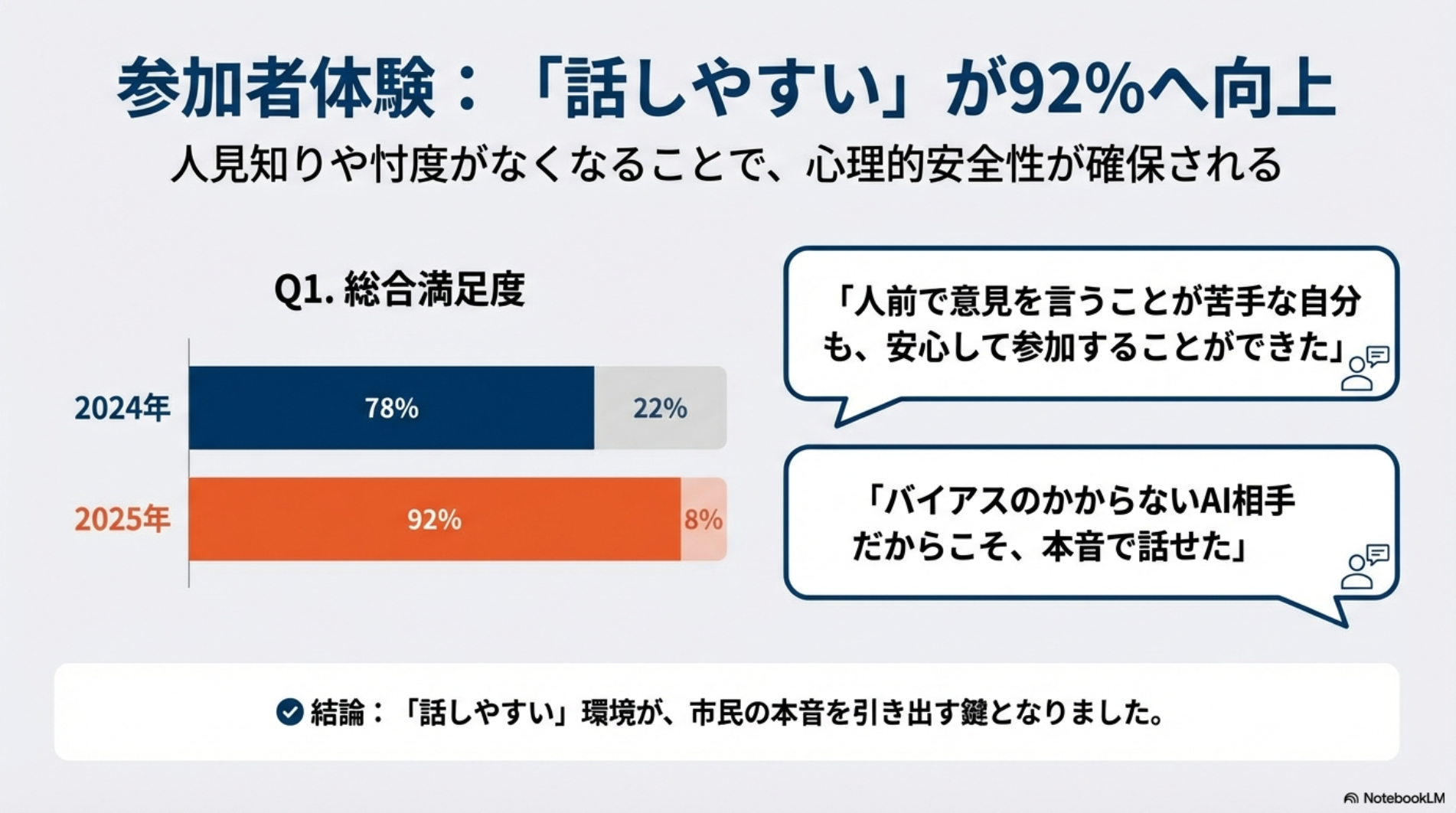
Participant Experience: “Easy to Speak” Improves to 92%
2.4 Comparison with Polis: Why Cartographer Was Chosen
The vTaiwan model in Taiwan uses a tool called “Polis” to visualize opinions, but Cartographer was selected for the DD2030 experiment. The main reasons were as follows.
1 Saving Time Through Automatic Question Generation
Polis primarily uses a format in which participants post their own opinions (Statements) and other participants vote on them, but it takes time for a sufficient range of opinions to emerge and votes to accumulate. Cartographer, by contrast, uses generative AI to create questions automatically. This reduced the time participants needed to formulate opinions from scratch and made it possible to visualize the distribution of opinions efficiently within the limited 3-hour session.
2 Real-Time Feedback from Spoken Discussions
In this experiment, conversations held in Zoom breakout rooms were transcribed and fed into Cartographer as input. By running a cycle of “survey responses” → “report generation” → “deliberation” → “AI learning from the discussion” → “generation of new questions,” the content of spoken discussions—which is difficult to incorporate with Polis—could immediately be reflected in the next set of survey questions.
3 Advanced Facilitation Support
Cartographer does more than simply visualize support and opposition. Through its AI-generated analysis reports, it also produces “specific prompts for deepening deliberation.” Facilitators receive concrete guidance such as, “To move beyond this conflict, try asking the following question next,” enabling even moderators without specialized skills to lead constructive discussions.
Chapter 3 Overview of the Experiment: DD2030 Deliberative Workshop on 2026/1/10
3.1 Workshop Structure
The DD2030 Deliberative Workshop held on 2026/1/10 took place online via Zoom and was designed as an approximately 3-hour program. Participants were citizen volunteers interested in digital democracy, including members of the DD2030 community and Code for Japan.
Workshop Flow
- Advance Input: Sharing background materials on push-based social security systems and summaries of those materials generated by NotebookLM
- Round 1 (Cartographer Survey): Participants answer AI-generated questions, visualizing their positions
- Group Deliberation 1: Small-group discussions in breakout rooms (with a facilitator assigned to each room)
- Round 2 (Cartographer Survey): AI generates new questions based on transcripts of the discussions, and participants respond again
- Group Deliberation 2: Discussion of issues explored in greater depth
- Full-Group Sharing and Summary: Sharing each group’s discussion results and reviewing points of agreement and outstanding issues
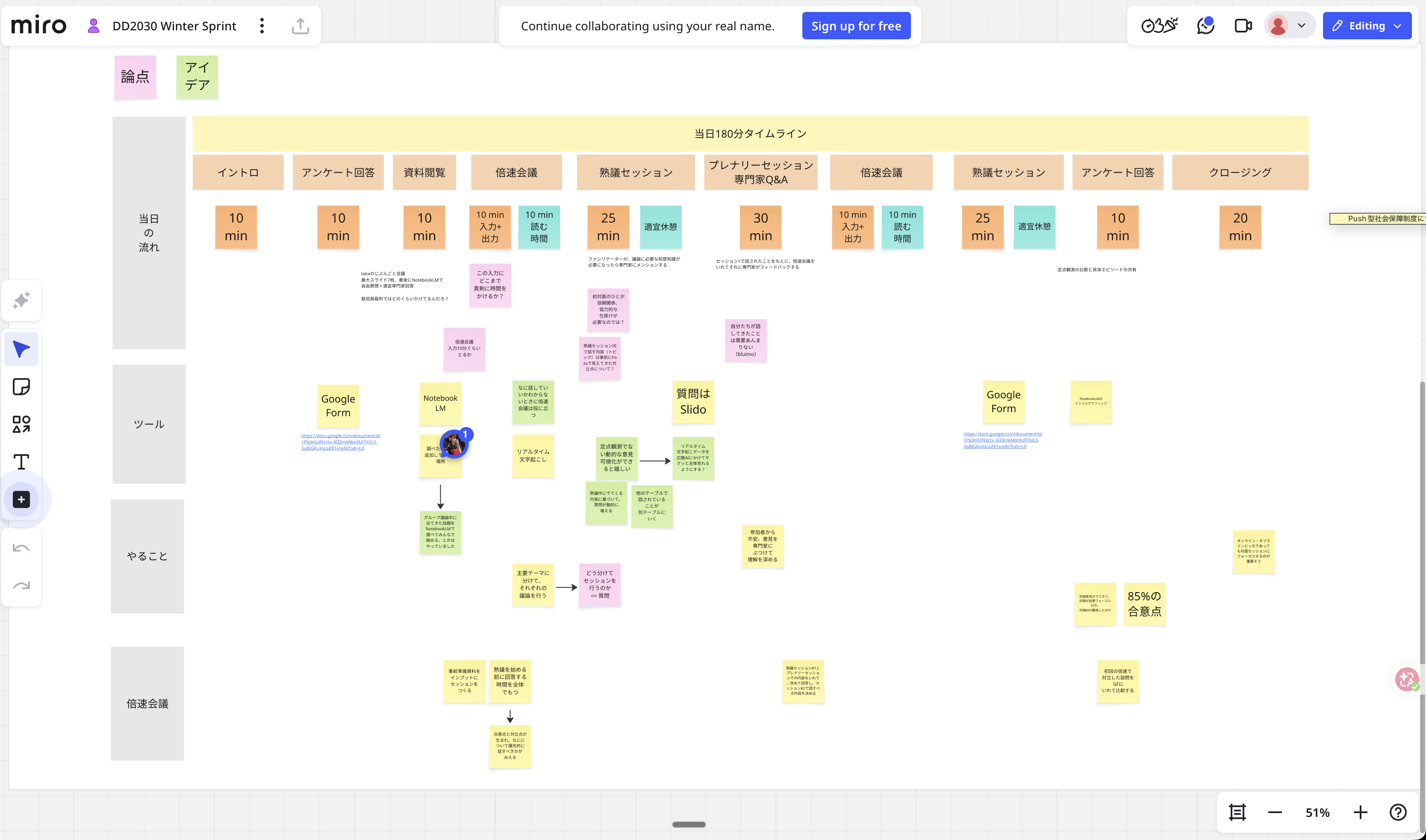
Workshop timeline and overall design (Source: Miro Workshop Design)
3.2 Facilitator Selection: Moderation by Citizens Who Were Not Experts
One of the most important features of this experiment was the method used to select facilitators. While conventional deliberation has been considered to require professionally trained facilitators, this experiment deliberately chose moderators primarily from “community members who were not experts in deliberation,” through self-nomination and recruitment within the community.
Background to the Selection
During the project kickoff and preparatory discussions, it had been established that “none of the members were professionals who practiced deliberation as their occupation.” Rather than inviting highly skilled facilitators from outside the community, members from the community’s broader network therefore took on the role.
This approach was also intended to test how far AI tools such as Cartographer could support or substitute for facilitation, making it meaningful to have members who were deliberately not experts serve as moderators.
Recruitment and Selection
- Recruitment within communities: Open calls for facilitators in Slack and Discord communities
- Self-nomination and nomination by others: Volunteers stepping forward with sentiments such as “I’ll do my best if no one else is available,” as well as direct outreach to people from other fields who seemed likely to be interested
- Direct invitations: Participation through direct invitations from the project leader
Requirements for Facilitators
The facilitators were not required to have subject-matter expertise in the theme. They were only expected to adopt the following approach:
- Support the discussion from a neutral position
- Ensure that every participant has an equal opportunity to speak
- Refrain from expressing their own opinions
Members Who Served as Facilitators
Five people served as facilitators on the day: Shingo OHKI, Kazuya Toki, Shunsuke Kubonishi, Hayato Kobayashi, and Keiko Nawata (who also served as operations lead). None specializes professionally in deliberation or facilitation, and their primary occupations span a diverse range of fields.
Chapter 4: Specific Questions Generated by Cartographer
The “questions” produced by Cartographer fell into two broad categories: “survey statements” (Statement) on which participants voted, and “prompts” (Questions for Deliberation) that the AI suggested to facilitators to deepen the discussion. The statements that were actually used are presented below.
4.1 Round 1: Statements Exploring Assumptions and Values
At the beginning of the discussion, statements were presented to clarify participants’ fundamental positions and values.
Cartographer response screen (sample statement): Participants responded to each statement by selecting their level of confidence
Statement 1: “Even when someone is struggling to make ends meet, the government should not provide assistance unless that person applies for it.”
Statement 2: “I support using government-held data on income and household composition to automatically notify eligible individuals about available assistance.”
Statement 3: “Even if it would benefit me, I am uncomfortable with government departments sharing my personal information across departmental boundaries.”
Statement 4: “I would be willing to provide the national government with information such as my medical history or disability status in order to receive information about support programs.”
Statement 5: “For extremely sensitive information, such as information about domestic violence victimization, confidentiality should take precedence over convenience.”
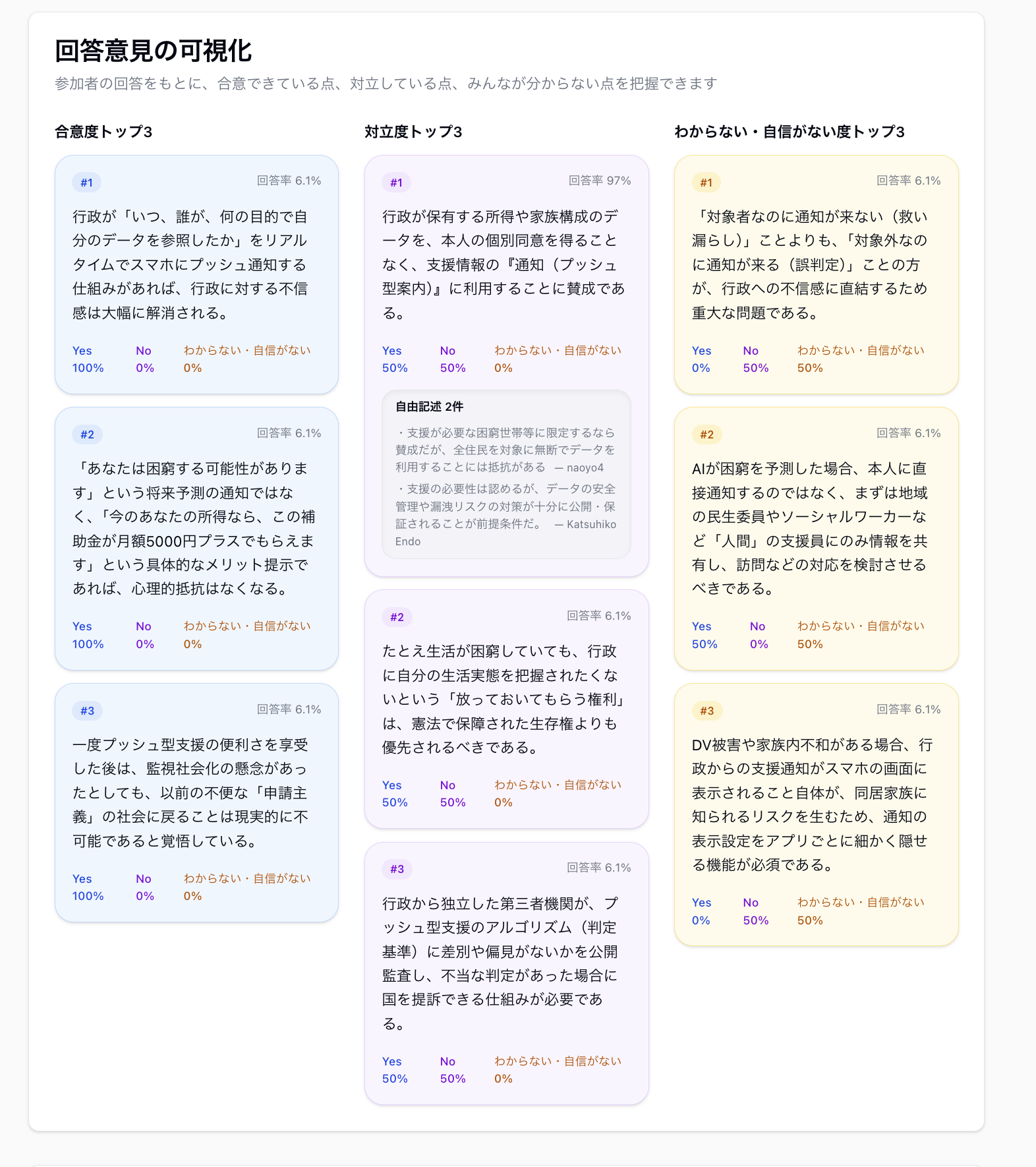
Round 1 response distribution (visualization example)
4.2 Round 2: Statements Explored in Greater Depth Following Discussion
Based on the Round 1 responses and the discussions in the breakout rooms, the AI automatically generated more specific and in-depth statements.
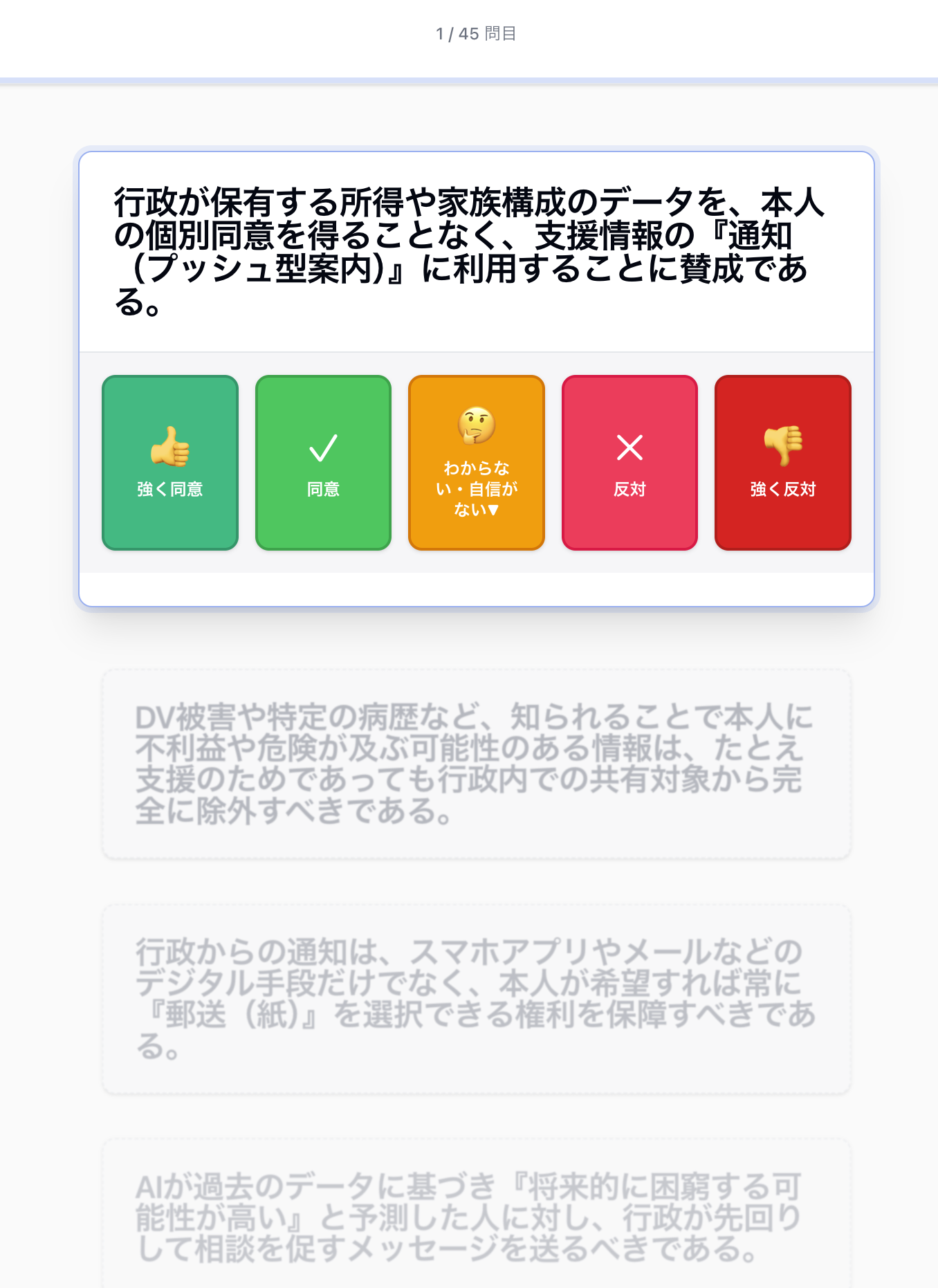
Round 2 response screen (sample statements)
Statement A: “I support the use of government-held data on income and household composition for ‘notifications (push-based guidance)’ about support information without obtaining individual consent from the person concerned.”
Statement B: “Information that could expose an individual to harm or danger if disclosed, such as domestic violence victimization or certain medical histories, should be completely excluded from information shared within the government, even when the purpose is to provide support.”
Statement C: “Government notifications should not be limited to digital channels such as smartphone apps and email; individuals should always be guaranteed the right to choose ‘postal mail (paper)’ if they wish.”
Statement D: “The government should proactively send messages encouraging consultation to people whom AI predicts, based on historical data, are ‘highly likely to face financial hardship in the future.’”
4.3 Suggested “Prompts” for Facilitators
Cartographer analyzed the survey results and discussion transcripts, then suggested specific prompts to facilitators as topics that “should be discussed.” These prompts were designed to help participants move beyond points of disagreement.
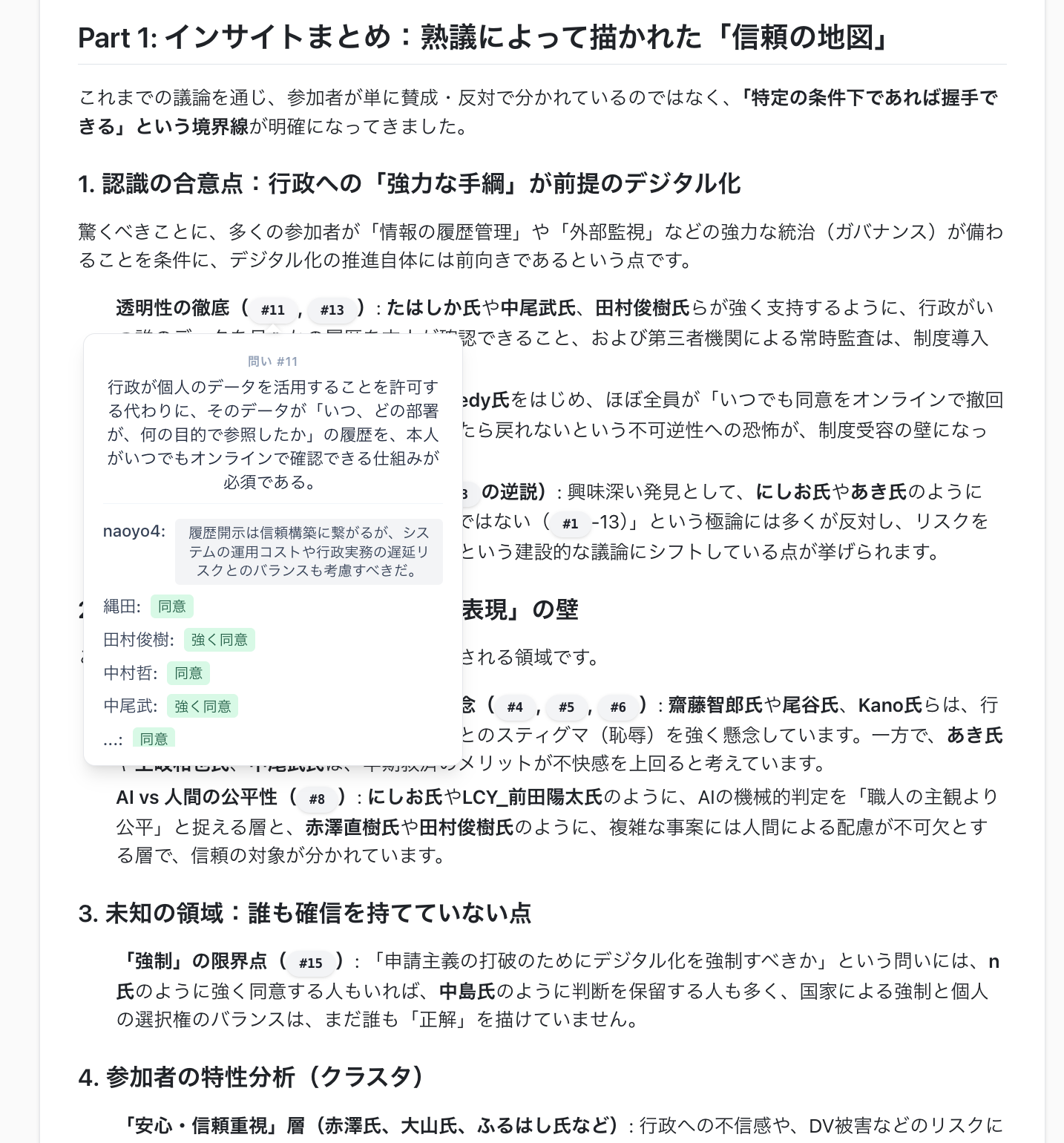
Summary of Insights: A “Map of Trust” Drawn through Deliberation
Part 1: Summary of Insights: A “Map of Trust” Drawn through Deliberation
Through the discussions to date, it has become clear that participants are not simply divided into camps of support and opposition. Rather, clear boundaries have emerged around the conditions under which they can “reach common ground.”
- Areas of agreement: Digitalization contingent on “strong safeguards” over government Thorough transparency (#11, #13): Participants strongly emphasized that individuals must be able to review records showing “when, which department, and for what purpose” their information was accessed, and that continuous oversight by an independent body must be a prerequisite for introducing the system.
- Strong demand for revocability A mechanism allowing people to “revoke consent online at any time” is essential. Fear of irreversibility—the inability to retrieve information once it has been provided—is creating a barrier to acceptance of the system.
- Rejection of binary choices and constructive framing of issues Many participants rejected the extreme position that “no use of data should be permitted whatsoever,” shifting the discussion toward the constructive question of how risks should be managed.
- Divergence in the objects of trust Participants were divided between those who viewed AI’s mechanical judgments as “fairer than human subjectivity” and those who believed that human consideration is indispensable in complex cases.
- Unexplored territory: The limits of compulsion Opinions were divided on the question (#15) of whether “digitalization should be made mandatory to overcome an application-based system.” The balance between state compulsion and individual choice remains unresolved.
- Analysis of participant characteristics (clusters) The “security- and trust-oriented” group (including Mr. Akazawa, Mr. Oyama, and Mr. Furuhashi) showed a strong awareness of distrust in government and risks such as domestic violence victimization.
This synthesis shifted the discussion from “support or opposition” to “the conditions under which agreement is possible.”
Chapter 5: Transformation of the Discussion: From Conflict to Consensus Building
5.1 Phase Transition: From “Whether to Implement” to “How to Implement”
The questions generated by AI advanced the participants’ discussion from “a simple clash between support and opposition” to “a search for the conditions needed to build consensus (an exploration of boundaries).” This transformation can be summarized as follows.

The discussion transformation process: how AI visualized the deepening of issues and the path toward consensus
【Qualitative Changes in the Discussion】
| Before Deliberation | After Deliberation | |
|---|---|---|
| Discussion structure | A binary conflict between “support” and “opposition” | A search for “the conditions under which it would be acceptable” |
| Typical arguments | “I oppose it because I fear data leaks”; “I support it because it is convenient” | “I would consider it positively if the right to withdraw and transparency were guaranteed” |
| Focus of the question | “Should the system be introduced or not?” (whether to implement) | “How can it be designed to be trustworthy?” (how to implement) |
The AI’s questions shifted the quality of the discussion from the stage of asking “whether the system should be implemented” to considering “how to make the system trustworthy”—a discussion of implementation. By posing conditional questions such as “What if...?”, the AI moved participants from “unconditional opposition” to a position of “conditional acceptance”: “If transparency and the right to withdraw are guaranteed, I could consider it positively.”
5.2 Concrete Examples of Changes in the Discussion
【Example 1】Deepening the Discussion on the “Sensitivity” of Information
AI’s question
“If the notification were limited to matters concerning ‘money’ and did not include ‘sensitive information’ such as medical history, would you consider it acceptable without prior consent?”
Change in the discussion: Initially, there was a vague concern that “the absence of consent is frightening.” This question, however, prompted participants to begin discussing specific boundaries (tiering), such as: “Income and tax information would be acceptable, but information about mental illness or domestic violence victimization would not.” As a result, the discussion progressed from “rejecting everything” to “creating rules based on the type of information.”

Example visualization of the issue list (from the first session's report)
【Example 2】Deepening the Discussion on AI Predictions (Proactive Intervention)
AI’s question
“What wording and method would make a message warning you of a ‘future crisis’ feel like ‘encouragement (support)’ rather than ‘surveillance’?”
Change in the discussion: Participants strongly rejected being told that they would face hardship in the future, out of concern that this would label them. In response, the AI posed a question focused on “how the message is phrased.” This shifted the discussion from “whether predictions should be made” toward a search for a constructive solution: instead of definitively stating, “You are in hardship,” participants could accept a presentation of options (a nudge), such as, “If your current circumstances continue, this program is available to you.”
【Example 3】Discussion of Fairness Between “Human vs. Digital” Services
AI’s question
“If digitalization freed up time so that public employees could shift from ‘counter service’ to ‘building relationships by visiting you at home,’ would that be a desirable future?”
Change in the discussion: In response to the conflict between “digital coldness” and “human warmth,” the AI posed this question, giving rise to a paradoxical perspective: “Might human counter staff actually be less fair because their decisions are subject to biases arising from their mood or personal compatibility?” This led to the discovery of a new value: AI-based decisions that guarantee support whenever the criteria are met may in fact be fairer and impose less of a psychological burden.
5.3 The Role Played by AI: Drawing a “Map” of the Discussion
According to participant feedback and the reports, the AI (Cartographer) was not merely a recorder. It transformed the discussion by playing the following roles.
1 Providing a “map” of the issues: By visualizing (in reports) “what has been agreed upon so far” and “where disagreements remain,” the AI enabled participants to view their own positions objectively and avoid unproductive, circular arguments.
2 Guiding participants toward constructive discussion premised on “distrust”: The AI avoided the difficult-to-resolve question, “Can the government be trusted?” Instead, it guided participants toward concrete design considerations by asking, “What forms of ‘oversight (such as review by a third-party body)’ would make you feel comfortable entrusting your information to the government?”
Chapter 6 Points of Agreement and Remaining Challenges
This chapter organizes the points of agreement and challenges identified through the deliberation, with reference to the analysis in the Citizen Opinion Report on Push Notifications. The report aggregated 47 opinions and 1,593 votes, from which 6 topics and 21 subtopics were extracted.
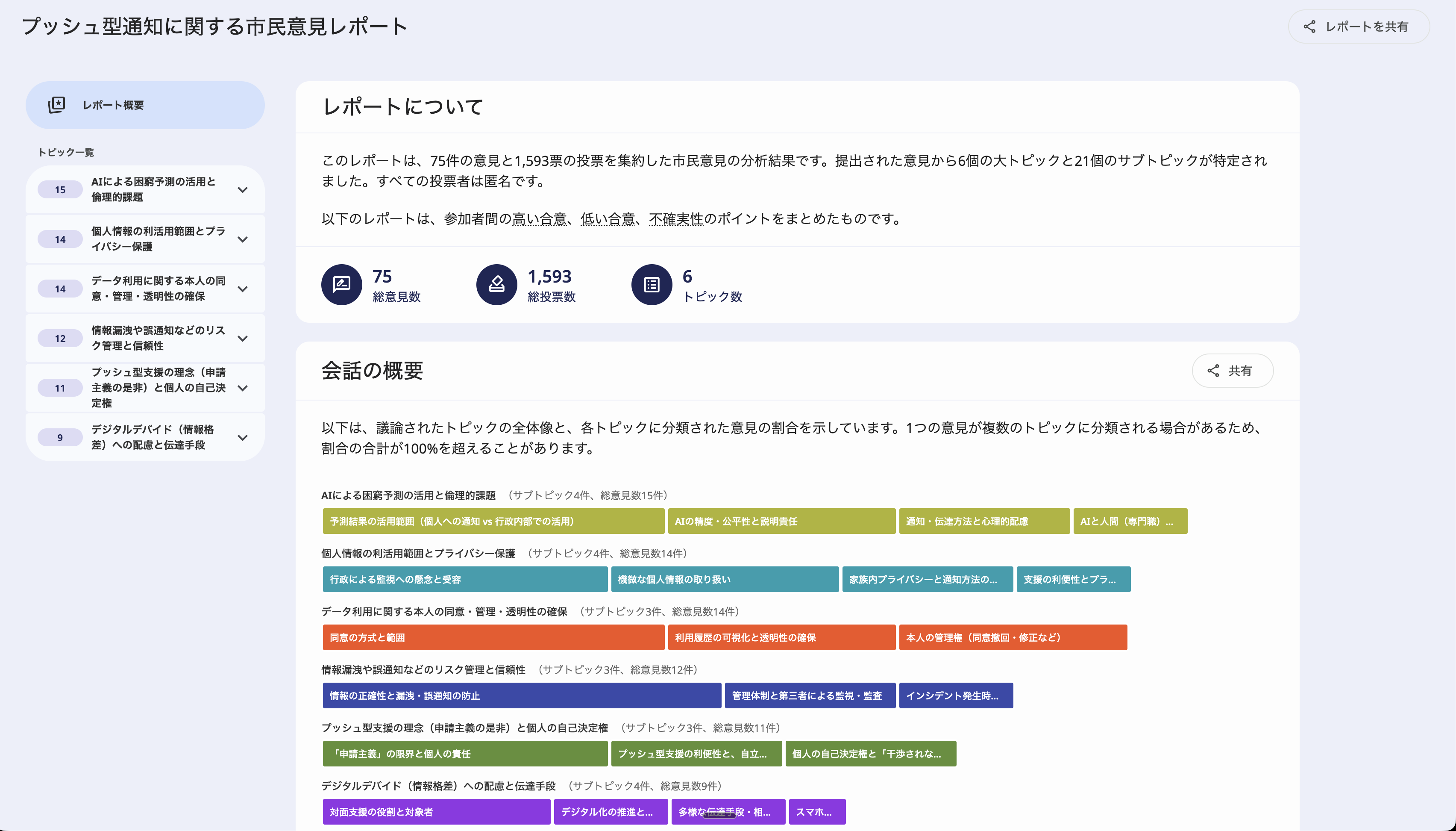
Citizen opinion report dashboard: overview and key metrics
The main topics, in descending order, were the use of AI to predict hardship and related ethical issues (31.9%), the scope of personal data use and privacy protection (29.8%), ensuring individual consent, control, and transparency in data use (29.8%), risk management and reliability concerning data leaks and erroneous notifications (25.5%), the principles of push-based support and individual autonomy (23.4%), and consideration for the digital divide and communication methods (19.1%). Because a single opinion may be associated with multiple topics, the total exceeds 100%.
6.1 Points of Agreement (Consensus): Guardrails for Trust
Many participants indicated that they would be willing to accept digitalization and push-based support if the following “essential prerequisites” were met. These correspond to issues categorized in the report as having “somewhat high/high agreement.”
【Point of Agreement 1】A Package of Consent, Transparency, and Control Rights
“The method and scope of consent,” “visibility into usage history,” and “control rights, including the withdrawal and modification of consent” were areas with relatively high levels of agreement. Participants repeatedly supported, as prerequisites for accepting the system, the ability to verify when, by whom, and for what purpose their information had been accessed, as well as the ability to withdraw consent at any time.
【Point of Agreement 2】Clear Risk Management and Third-Party Oversight
Agreement was relatively high regarding “ensuring information accuracy and preventing leaks and erroneous notifications” and “third-party oversight and audits.” Participants shared the view that governance must be implemented first. Rather than focusing merely on convenience, they emphasized the importance of the supervisory structure during operation.
【Point of Agreement 3】The Limits of Application-Based Systems and the Importance of In-Person Support
“The limits of application-based systems and individual responsibility” and “the role of in-person support” were areas of high agreement, reflecting strong awareness that those in greatest hardship are the least likely to reach the point of applying. At the same time, participants also agreed on the need to retain non-digital points of contact.
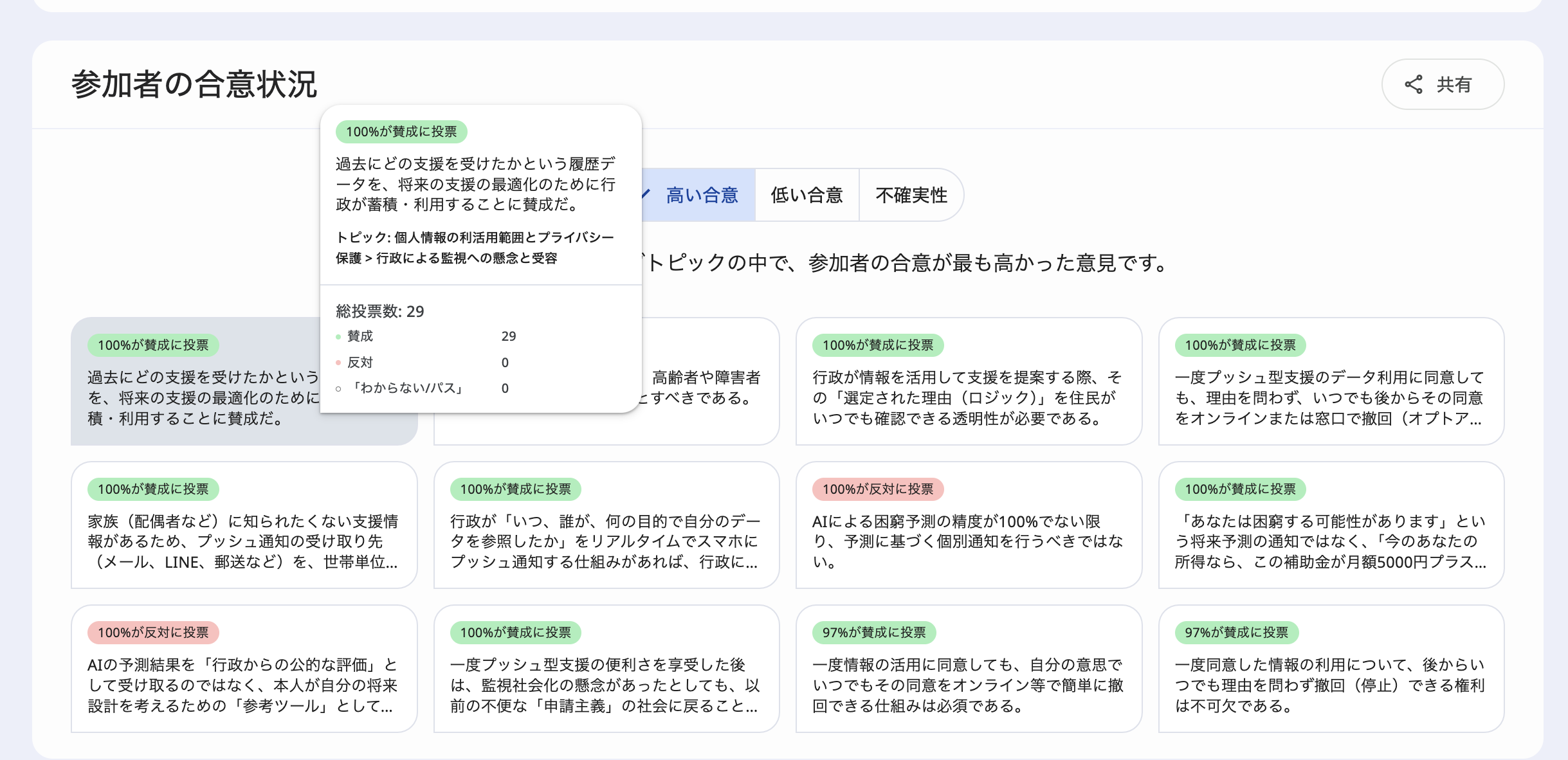
Participant agreement: opinion cards and the distribution of support and opposition
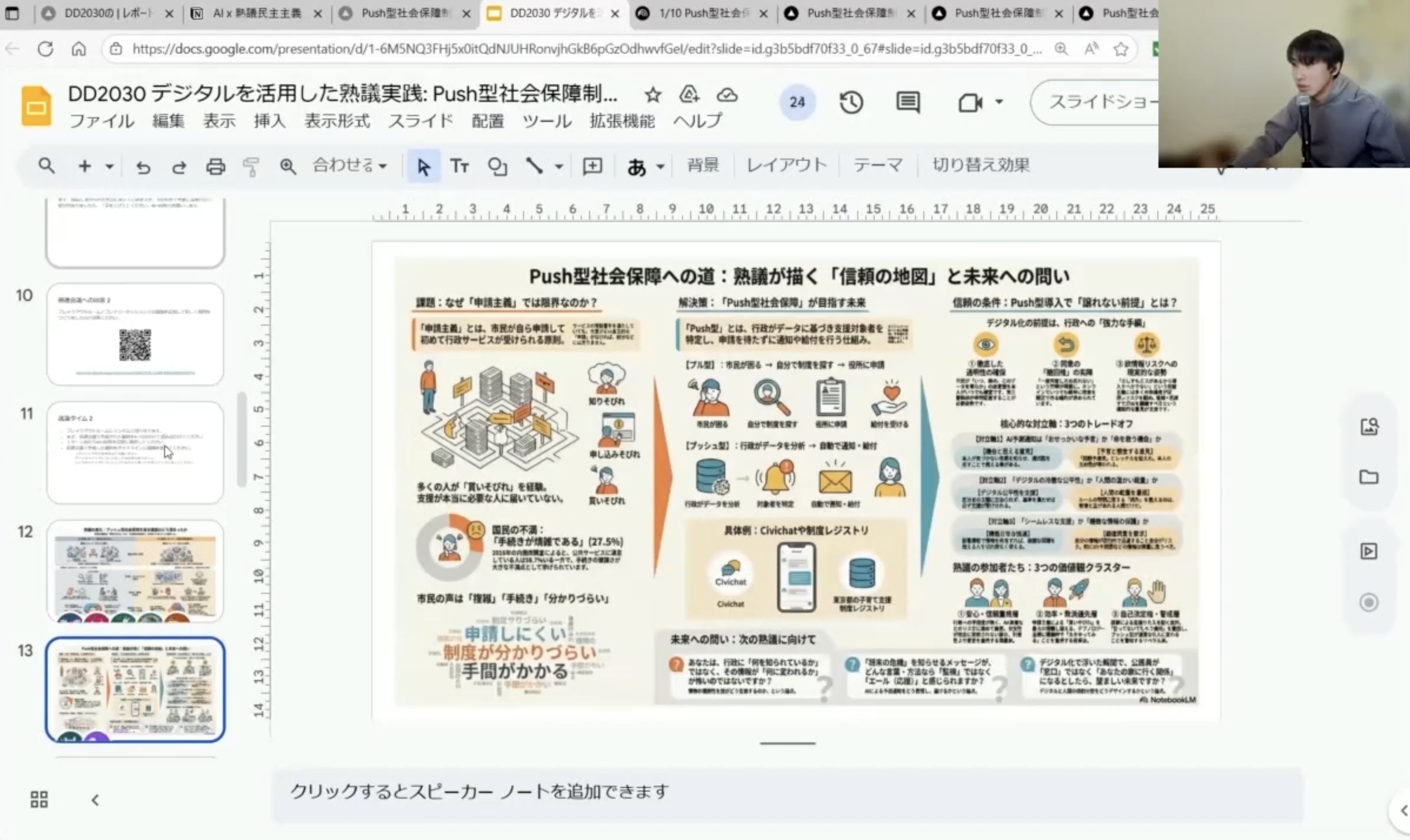
Infographic summarizing the points of agreement (Source: Presentation Materials (Google Slides))
6.2 Clarified Points of Conflict (Trade-Offs): Challenges to Be Resolved
Although the binary conflicts were resolved, issues with low agreement remained as “design uncertainties.” The following areas in particular require focused consideration because engagement was high while agreement remained limited.
【Point of Contention 1】 Scope of Use and Accountability for AI Predictions
There remains little consensus on where to draw the line between “notifying individuals directly of prediction results” and “using them internally within government.” Persistent concerns also remain about AI accuracy, fairness, and accountability, with the handling of erroneous determinations posing a barrier to public acceptance of the system.
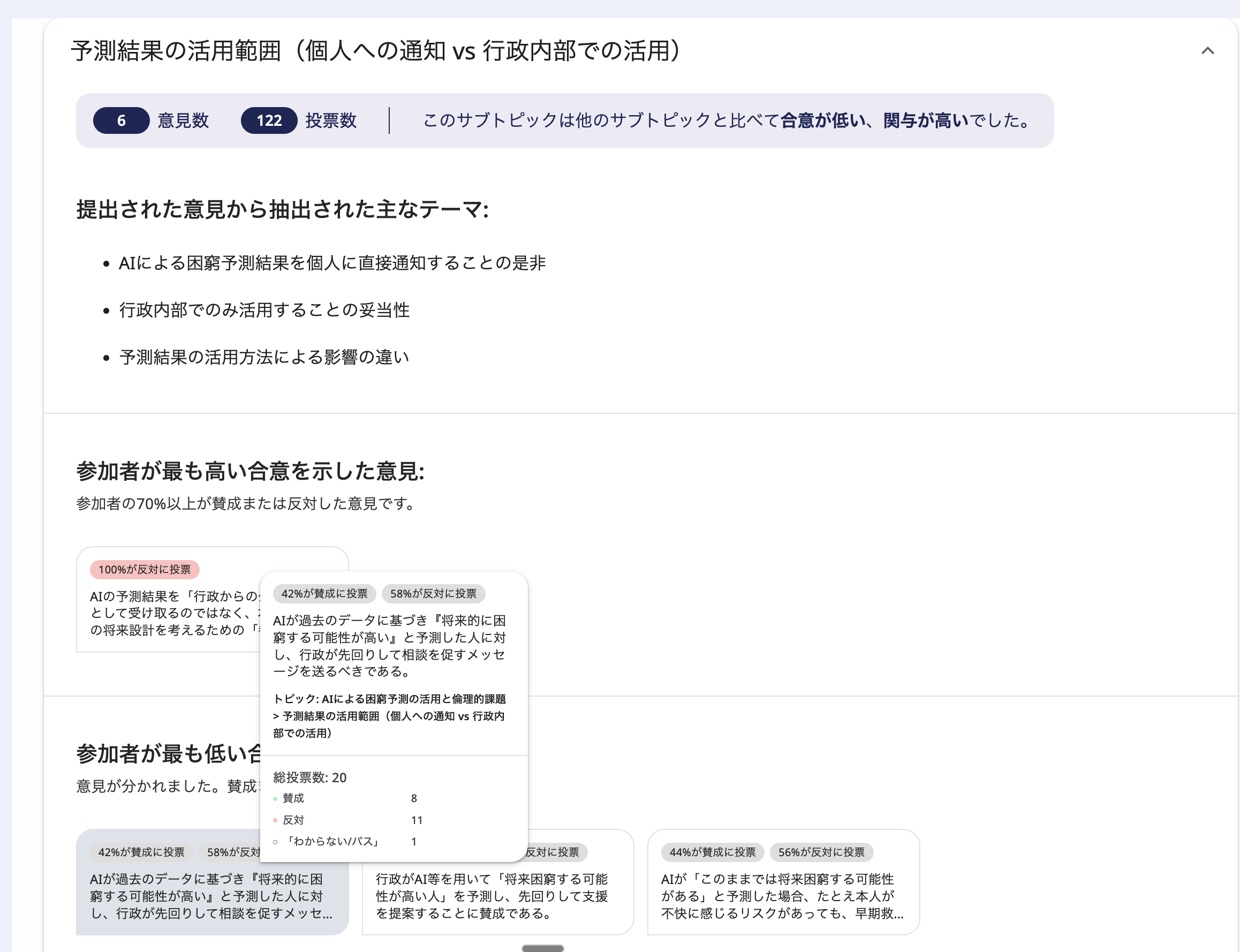
Scope of use for prediction results: notification to individuals or internal government use
【Point of Contention 2】 The Trade-Off Between Privacy and Convenience
While there is a degree of consensus on the “handling of sensitive personal information,” opinions are divided on where to strike a balance between convenience and privacy. Privacy within families and individualized notification settings also remain areas of limited consensus.
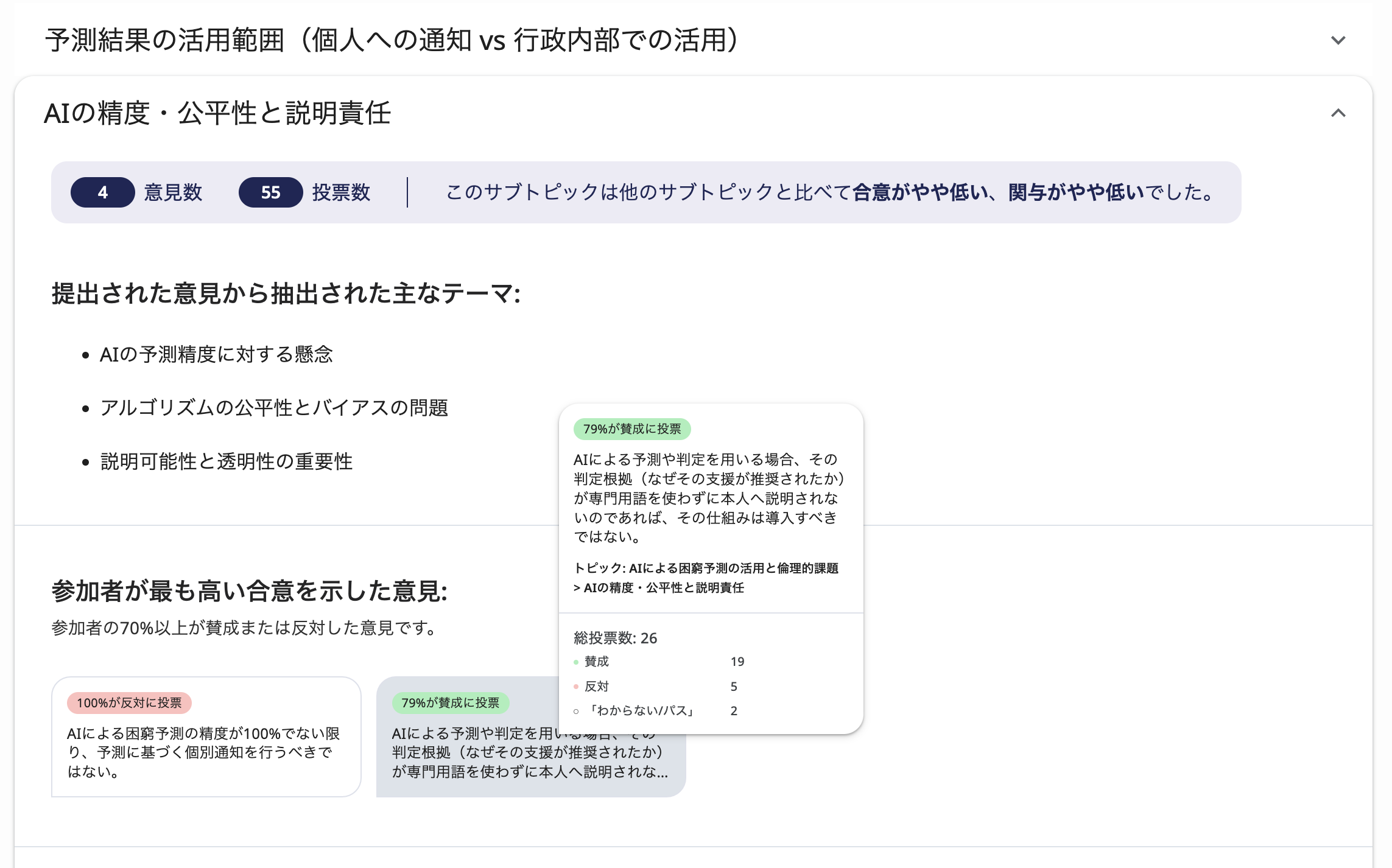
Issues concerning AI accuracy, fairness, and accountability
【Point of Contention 3】 Self-Determination and the “Right to Be Left Alone”
Persistent concerns remain that the convenience of push-based support may come at the cost of violating the “right to be left alone.” Although participants shared an understanding of the limitations of application-based systems, differences remained in how they perceived the risks of undermining independence and creating a surveillance society.
【Point of Contention 4】 Putting Digital-Divide Measures into Practice
While there was strong consensus on the “role of in-person support,” there tended to be limited consensus on specific measures for non-digital users and on ensuring diverse means of communication. The challenge lies in balancing the design of multiple channels—such as paper, telephone, and service counters—with the operational burden they entail.
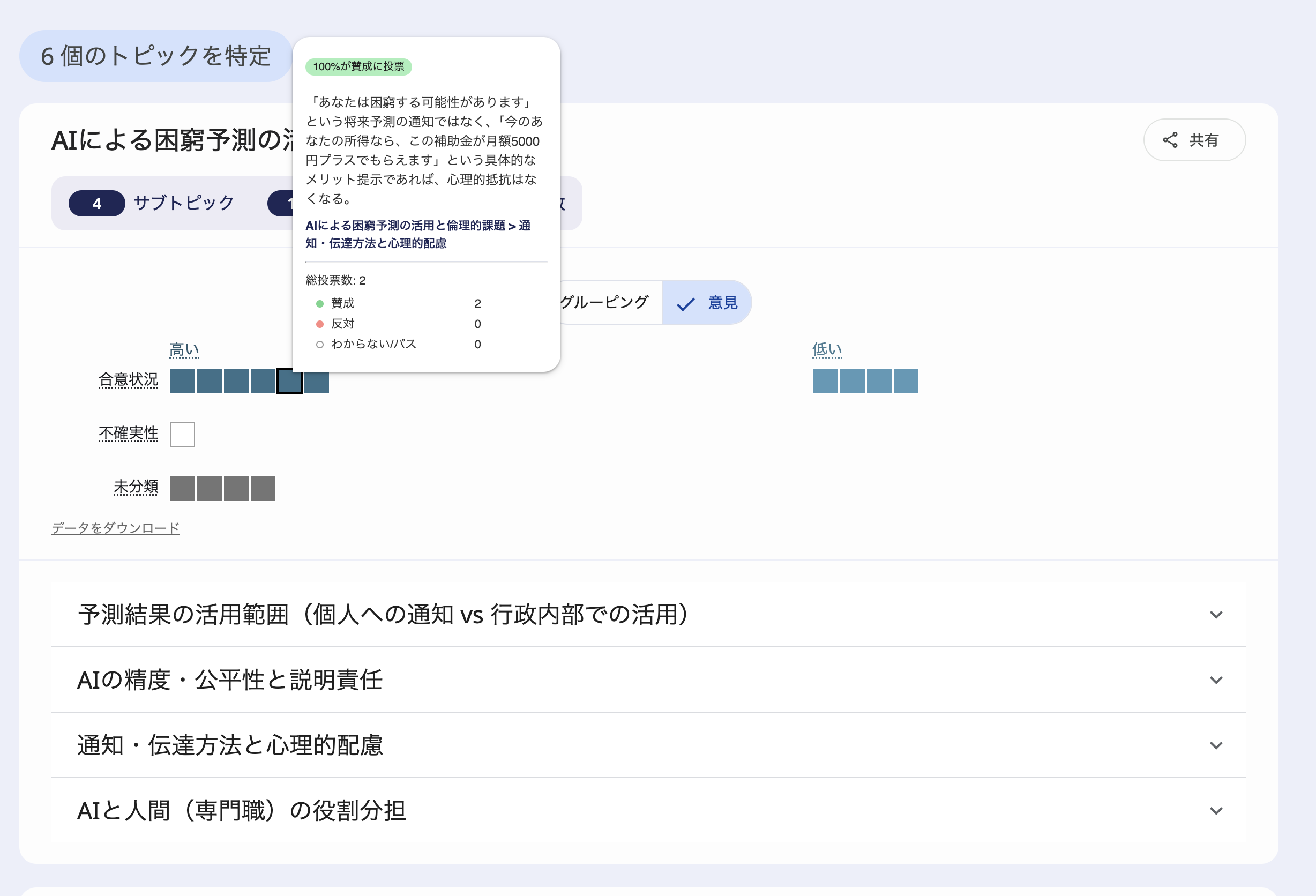
Consensus by subtopic: bringing the issues into sharper focus
6.3 The Essential Outcome of Deliberation
Through the deliberation conducted with Cartographer, the difficult question of “whether to trust government unconditionally” was elevated into a “design question”: “What safeguards—consent, transparency, and audits—would enable people to use the system even while retaining their distrust?” The report also visualized areas of high and low consensus, clearly identifying the issues that should be explored in greater depth next.
The participants did not reach unanimous agreement. Nevertheless, citizens succeeded in drafting concrete specifications (requirements) for reconciling “proactive outreach that leaves no one behind” with “the freedom to ensure that no one’s life is intruded upon.” This is one demonstration that deliberative democracy can work in practice.
Chapter 7: Reactions from Participants and Facilitators
7.1 Facilitator Perspectives
This section presents impressions from the facilitators and participants who used Cartographer in this deliberative experiment, as well as their reactions during the actual proceedings. In short, it was highly regarded not merely as a documentation tool, but as “a partner that supplies material—issues to consider—for deepening the discussion.”
【Reflections from Shingo OHKI】
“These are really interesting issues. Reading this report, it feels like there is plenty more we could discuss if we wanted to take the conversation even further.”
He made this comment near the end of the session while reading the generated report, which organized the issues and opposing viewpoints. His reaction demonstrates that the issues presented by the AI were substantive enough to stimulate further discussion.
【How Kazuya Toki Used It】
After viewing the AI-generated participant classification results (the Personal Report), he used them for self-disclosure and as an icebreaker.
“I was categorized as someone who pursues benefits while maintaining a very cautious, balanced stance toward risk.”
It was striking to see how naturally he used the AI’s analysis as a conversation starter.
7.2 Feedback from the Community
Among the comments posted on social media, including X/Twitter, many emphasized that Cartographer was fundamentally different from conventional “AI meeting minutes.”
“I truly felt the discussion deepen at ‘double speed.’”
It was praised not merely as a documentation tool, but for the way AI helped organize and deepen the discussion in real time.
Some commenters expressed amazement at how the AI performed the functions of a facilitator, such as posing questions and organizing the discussion.
Chapter 8: Conclusion—The Transformation Brought About by Cartographer
8.1 Three Key Outcomes
[Outcome 1] A Qualitative Transformation of the Discussion
The debate over the merits of a “push-based social security system” evolved from “simple support or opposition (a binary conflict)” into “a search for conditional consensus” focused on what conditions, or guardrails, would make trustworthy implementation possible. In the short span of three hours, the process succeeded in turning citizens’ vague concerns into “concrete system-design requirements (guardrails).”
[Outcome 2] Democratizing Facilitation
In deliberative processes, which have traditionally required professionally trained facilitators, AI assistance enabled even “community members without expertise in deliberation” to guide high-quality discussions. By clarifying the issues and suggesting specific questions, Cartographer significantly lowered the barrier to effective facilitation.
[Outcome 3] A Dramatically Shorter Process
Traditionally, the processes of “organizing issues,” “consolidating opinions,” and “building consensus” required professional facilitators to spend anywhere from several days to several weeks. In this experiment, they were completed in three hours. A major factor was AI’s ability to rapidly run the cycle of “survey → report generation → deliberation → generation of new questions,” allowing multiple iterations of the discussion PDCA cycle within a short period.
8.2 The Value of Cartographer: Going Beyond Polis
While Polis excels at enabling “participants to set the agenda proactively (bottom-up),” Cartographer offered functionality aligned with the objective of this experiment—a three-hour workshop—by “using AI to rapidly establish the foundation and flow of a discussion and run the deliberation cycle (core loop) within a short period.”
The following capabilities, in particular, demonstrate Cartographer’s distinctive value.
- Automatic question generation: Reduces the time participants need to formulate opinions from scratch
- Real-time feedback from spoken discussions: Immediately incorporates the content of verbal discussions into the next set of questions
- Facilitation support: Generates specific questions designed to help participants move beyond disagreements
8.3 Future Outlook
This deliberation on the theme of a “push-based social security system” was conducted as an “implementation test” for the full-scale launch of Project Core Loop. The insights gained from this experiment will inform future full-scale policy discussions, such as measures to combat online advertising fraud.
Cartographer itself also continues to be improved. The following points identified through this experiment are expected to be reflected in the future development roadmap.
- More personalized question generation (v3 under development)
- Greater accuracy in meta-question generation
- Deeper integration with real-time transcription
A new form of deliberation in which AI and citizens work together has emerged, bringing us closer to realizing digital democracy.
Related Resources and Data
Event Materials and Records
- Event Materials (Google Slides)
- Notta Full Session #1 (Recording and Transcript)
- Notta Full Session #2 (Recording and Transcript)
- Breakout Session Recordings (Google Drive)
- Breakout Session Transcripts (Google Docs)
Cartographer Outputs
Example screens from the Cartographer dashboards and reports appear throughout this report.
Design and Preparation Materials
About This Report
This report was produced through a collaboration between DD2030 Project Core Loop and Plural Reality.
Cartographer is an AI-native decision-support tool developed and provided by Plural Reality.
January 2026
Platforms Used
Project overview
- Location
- Online (Zoom)
- Experimental Field
- Digital Democracy 2030 (DD2030)
- Date
- January 10, 2026
Table of contents
Contact Form
Pricing by individual quotation
We prepare a quotation based on the scope of work, scale of use and support required. Tell us about the challenge you are working on.