
Facilitation in the age of AI
Mini Publics Forum presentation materials
These slides were presented by Mr. Iijima of KOSO NIPPON, a Japanese policy think tank and a Plural Reality customer, at the Mini-Publics Forum. They distill lessons for using AI from our work together in randomly selected citizen assemblies (December 13, 2025).
Plural Reality and KOSO NIPPON have worked together in randomly selected citizen assemblies across Japan. This experience has taught us that simply delegating decisions to AI cannot create genuine public ownership. People meet, challenge different views, and change through the exchange. That deliberative process is what allows participants to say, “We decided this together.”
Citizen participation creates that sense of ownership, and strong facilitation enables deeper dialogue. Yet repeating established methods is no longer enough. In an age when AI is commonplace, facilitation must use technology as a means while preserving self-determination and supporting changes in action. The slides shared by Mr. Iijima of KOSO NIPPON at the Mini-Publics Forum offer one example.
In the field, there are many cases where general-purpose tools such as slides, online forms, and chatbots are used for "unintended purposes." That's why it's important to have a design that allows the facilitator to use it easily and explain that the AI won't take over the initiative in the discussion. While also referring to Google Jigsaw's research, we organized five areas of opportunity: expanding access to participation, supporting dynamic learning, visualizing dialogue, comparing and simulating multiple scenarios, and organizing discussion results.
Technology and facilitation
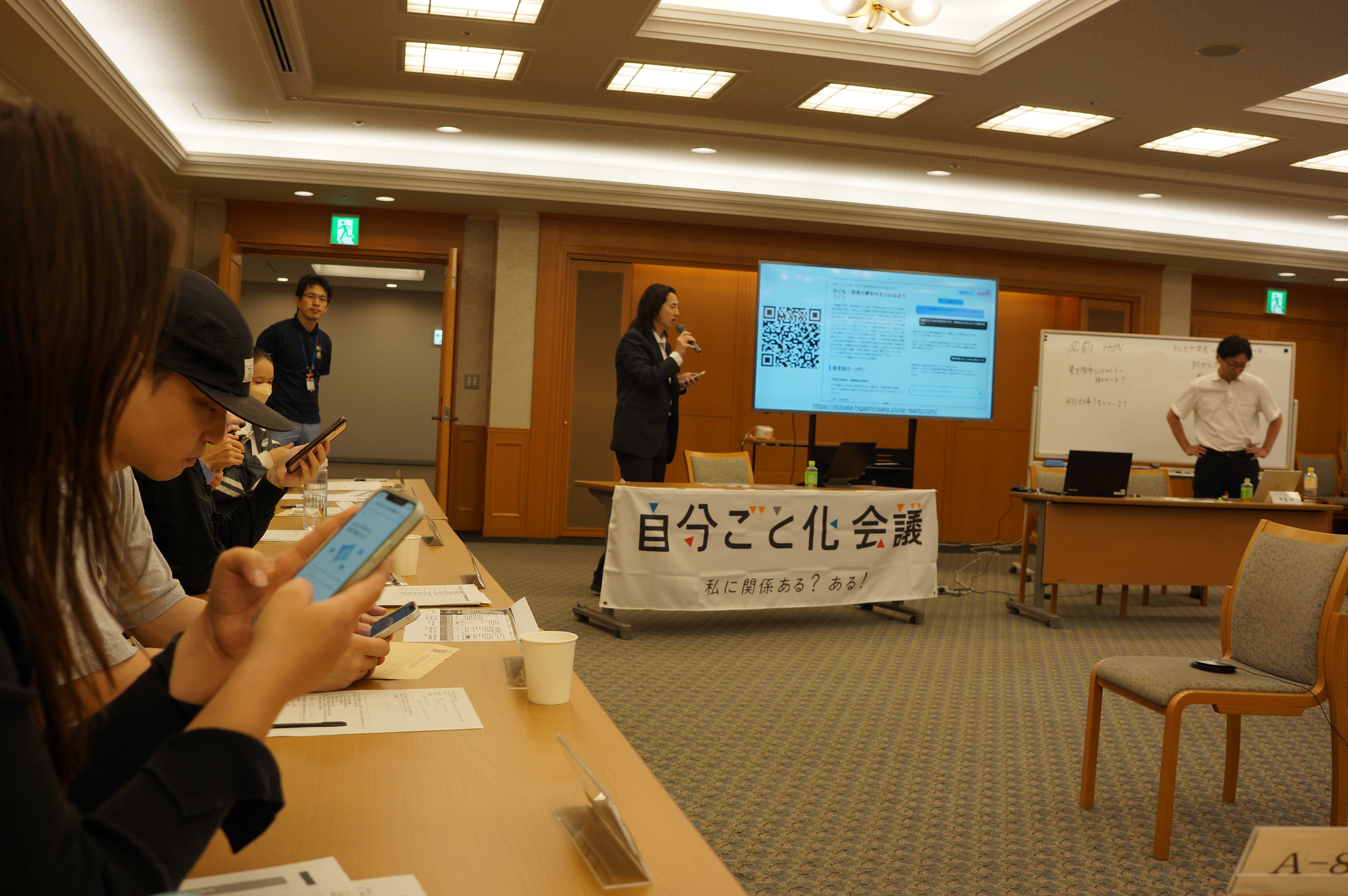
In civil dialogue, technology is just a tool. The goal is for participants to feel a sense of self-determination, to choose their own location, and to change their behavior. To this end, we believe that facilitation should be at the center of things, and that AI should be there to support it.
Repurposed Tools
Facilitators are often forced to combine multiple tools and use each one for "unintended purposes" (in ways other than their intended purpose), and there is a lack of tools designed for conversation.
Current tool usage: Many generic tools are used that are not designed for deliberation, such as slides, presentation tools, and online forms.
Integration burden: There are situations where comment posting tools, voting tools, etc. are combined haphazardly, which tends to increase the burden of communication between tools and account management.
AI experiments: There are cases where AI chatbots are being used to share prior knowledge and organize opinions, but there remain concerns about the depth of understanding and bias. On the other hand, effectiveness has also been reported for summaries and pre-study aids.
Challenge: The design of the discussion may be influenced by the specifications of the tool, and the purpose of the deliberation may become unclear.
Needs: What is needed is a toolkit that facilitators can easily use and adjust to the purpose of the discussion.
"Polis is a great tool if you want people to share their opinions and show you what people think of them. If you just want a quantitative number of people agreeing vs. disagreeing, Talk To The City is great... If you want to vote and rank after everyone has given their opinion, Remesh is a great tool."
— Facilitator
Augmentation, Not Automation
The value of AI is not to replace discussion, but to “augment” it. It supports human deliberation while showing that AI does not control the discussion. That is the role that AI should play.
Value of augmentation: It is effective in situations that support people's judgment, such as organizing discussion points and extracting diverse viewpoints.
Exception (large data processing): In participatory budgeting and large-scale online dialogue, LLM is effective in categorizing and organizing posts, and is an area where it is easy to obtain agreement from participants.
A note of caution on “saving time”: The time and friction required for deliberation are important processes that create a sense of acceptance and legitimacy, and simple efficiency improvements can have the opposite effect.
"The social production of knowledge and consensus...is the source of democratic legitimacy. This is more than just good math. It means that there are attributes that are lost if people don't have a shared experience of 'finding the answer.'"
— Facilitator
Building trust and securing access
Only through transparency, co-design, and fair access will AI become a tool that strengthens trust. It is also essential to have a design that shows that the AI will not lead to discussion.
Importance of trust: The premise of deliberation is that participants believe that their voices have meaning.
Concerns about AI: Bias, misinformation, and concerns about data handling undermine trust.
Fairness of access: A design that does not assume differences in devices or communication environments is required.
Clear purpose: Participants will be asked to explain what AI will be used for in a way that they can understand.
Co-design: It is important to co-design tools while involving facilitators and participants.
Opportunity Areas
"Technology that helps us organize vast amounts of information in a way that is useful to people...that's really transformative."
— Facilitator
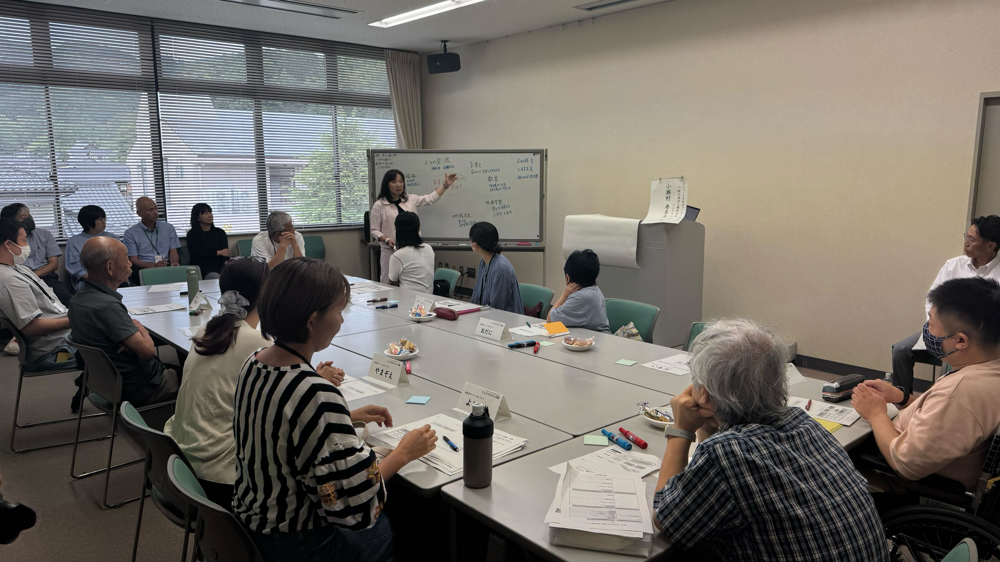
Through demonstration experiments at Residents Councils across the country, we have identified five areas of opportunity to improve dialogue. These correspond to the stages of “before discussion,” “during discussion,” and “after discussion.” They are connected through the flow of expanding access, dynamic learning, visualizing dialogue, comparing scenarios, and organizing results.
*The following insights come from our fieldwork and collaboration with KOSO NIPPON, with reference to research by Google Jigsaw.
Expanding Access
How can we overcome the barriers of language, distance, and cost of participation through large-scale dialogue?
Challenge in Practice: Barriers to participation include language differences, travel and time constraints, and the digital divide.
Needed Capability: We need a mechanism that allows participation in a variety of formats, including translation, subtitles, audio, text, and video.
“You need a tool that notifies all of your target audience at the same time... The hard part is the outreach... You need the notification to pop up on the screen where your target is looking.”
— Facilitator
“We need AI that is culturally sensitive to the specific terminology we use and understands the dynamics of the language itself... That will help with sensitive conversations.”
— Facilitator
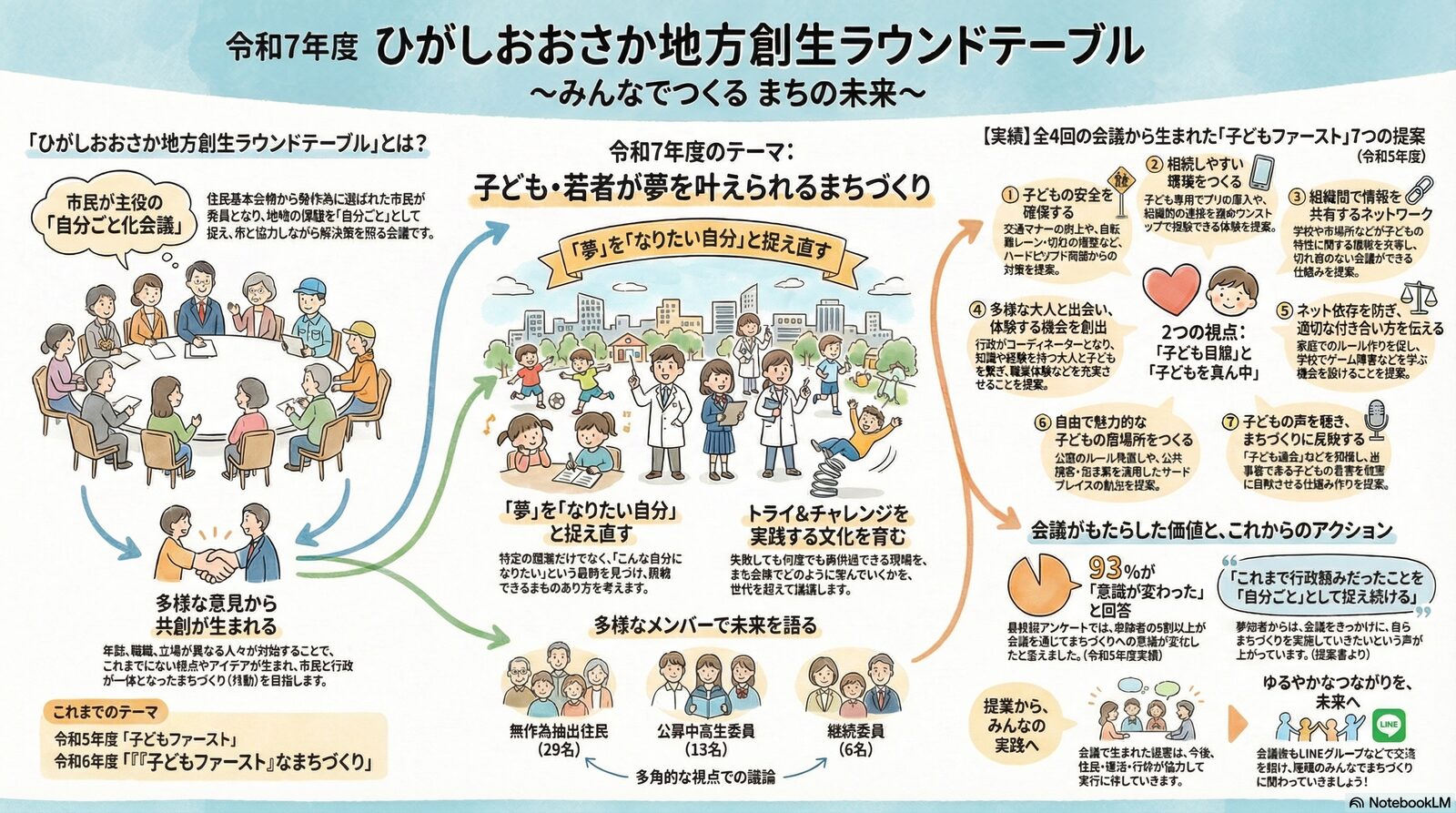
Translation support that can adjust the context and tone, and AI tools that can provide invitations and guidance tailored to the attributes of participants.
Contact Form
Pricing by individual quotation
We prepare a quotation based on the scope of work, scale of use and support required. Tell us about the challenge you are working on.